



Log in
Chemical substances in medicinal plants
Michaël Berthoud
/
8 March 2019
This is the first article in a series on medicinal plants. We’ll look at the different ways to use them at home to help us in everyday life. But first, let’s understand where these plants’ properties come from.
What struck me when I began looking into plants’ medicinal properties and their possible uses was that almost all of them have some. Some are sedatives, some aid digestion, some are toxic, some help wounds heal, and so on. Some are very well known, others less so. Above all, I get the impression that our knowledge of some species or families is more extensive than of others.
Plants are fascinating organisms that have followed a very different evolutionary path from ours as two-legged animals. They took the sedentary route, while we took the mobile one. This has enormous implications for how they interact with other plants, their environment and predators.
– How can I protect myself from UV rays if I can’t move into the shade during the hottest hours of the day?
– How can I protect myself from predators if I can’t run away from them?
– How can I attract my sweetheart if I can’t go to her?
To deal with these challenges, plants produce all sorts of chemical substances with specific effects. Here are a few of them.
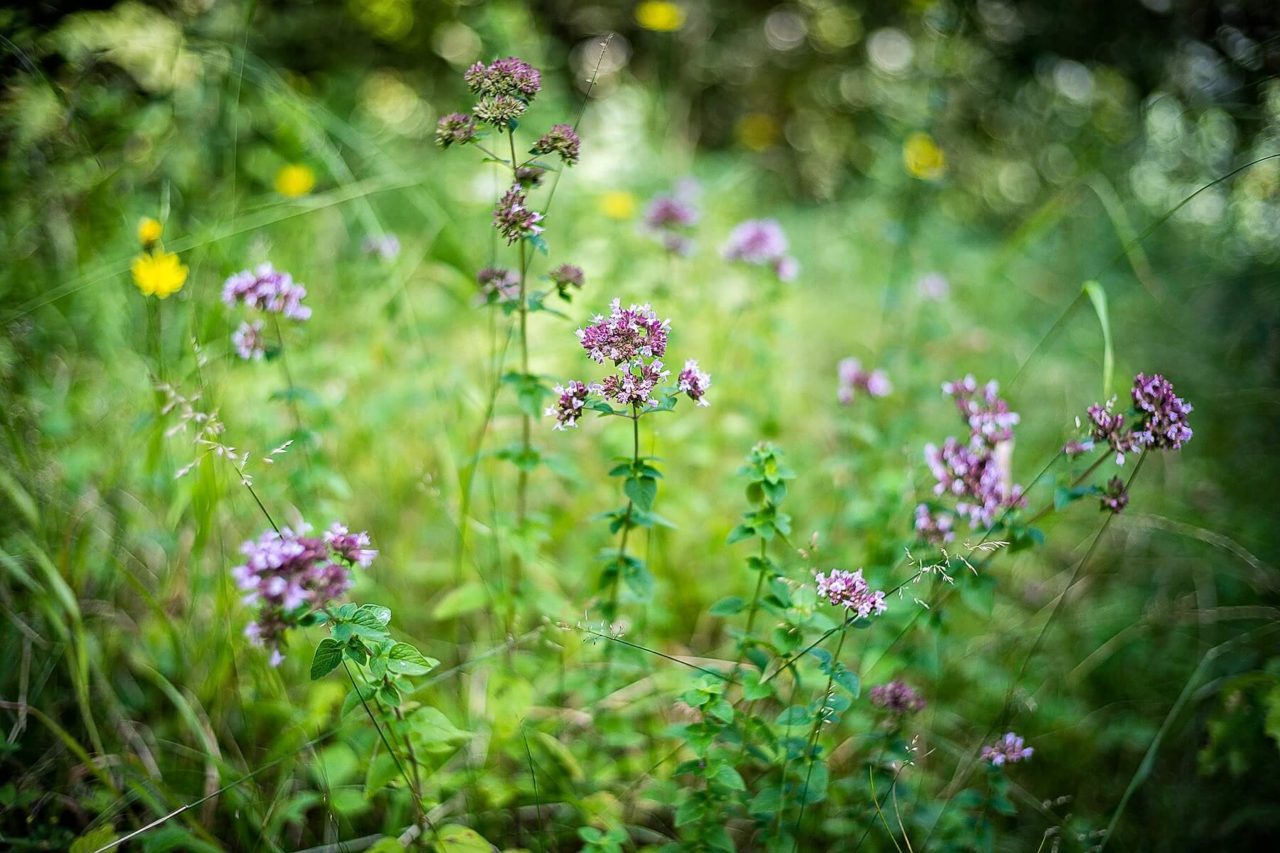
Important chemical substances found in plants
Flavonoids are responsible for the colour of leaves and their fruits. They have antioxidant properties that protect them from the harmful effects of UV radiation.
Tannins are polyphenolic compounds found in many plants. They include condensed tannins, which are derived from flavonoids, and hydrolysable tannins, which do not belong to that family. They are the fourth most abundant compound in plants. Their purpose is to protect plants from threats (pathogenic microbes, herbivores). They are used in herbal medicine for their astringent properties.
Mucilages are substances that help plants retain moisture, which is useful in arid conditions! These molecules swell and become viscous on contact with water.
Monoterpenes, meanwhile, are responsible for the fragrances of flowers. They help attract pollinators or deter predators. They have antibacterial properties.
As you can see, this array of molecules meets plants’ needs, but these molecules also affect us humans. Their effects can be positive or negative, as in the case of poisonous plants. However, the boundary between a poisonous plant and a medicinal plant is not clear-cut, and it is often said that the dose makes the poison.
All these molecules interact with one another. A plant cannot therefore be reduced to a single active compound. It is much more complex than that!
Now let’s return to our medicinal preparations. The aim, then, is to extract a plant’s active compounds as effectively as possible and transfer them into a substance that we can store easily and that will be easier to ingest.

References
[1] Plantes médicinales essentielles, Simmonds, Éditions Ulmer









29 November
Les Pléiades
- Marie Mellioret

Making a Christmas star Sold Out
Lally railway station, car park, Blonay, Switzerland.
04 April
La Sarraz
- Michaël Berthoud

Wild edible and medicinal spring plants in La Sarraz
La Sarraz football pitches car park. Route de Cossonay.
10 April
Les Pléiades
- Michaël Berthoud

Natural incense stick-making workshop
Lally railway station, car park, Blonay, Switzerland.
No events found.