



Log in
White melilot (Melilotus albus): identification, harvesting and cooking
Michaël Berthoud
/
7 August 2025
White melilot brightens roadsides with its delicate clusters of fragrant flowers, reminiscent of wild vanilla. A staple of wild food cooking, it lends a gentle, warm flavour to desserts and savoury dishes alike. Harvesting it requires care, both to preserve its aroma and to ensure it is safe to eat. Follow this guide to identify, harvest and make the most of this poetic herb in your cooking.
White melilot
Melilotus albus Medik.
= Trigonella alba (Medik.) Coulot & Rabaute
Family: Fabaceae
Parts used: leaves and flowers
⚠️ Precautions: melilot contains coumarins that may require precautions. See the notes at the end of the article.
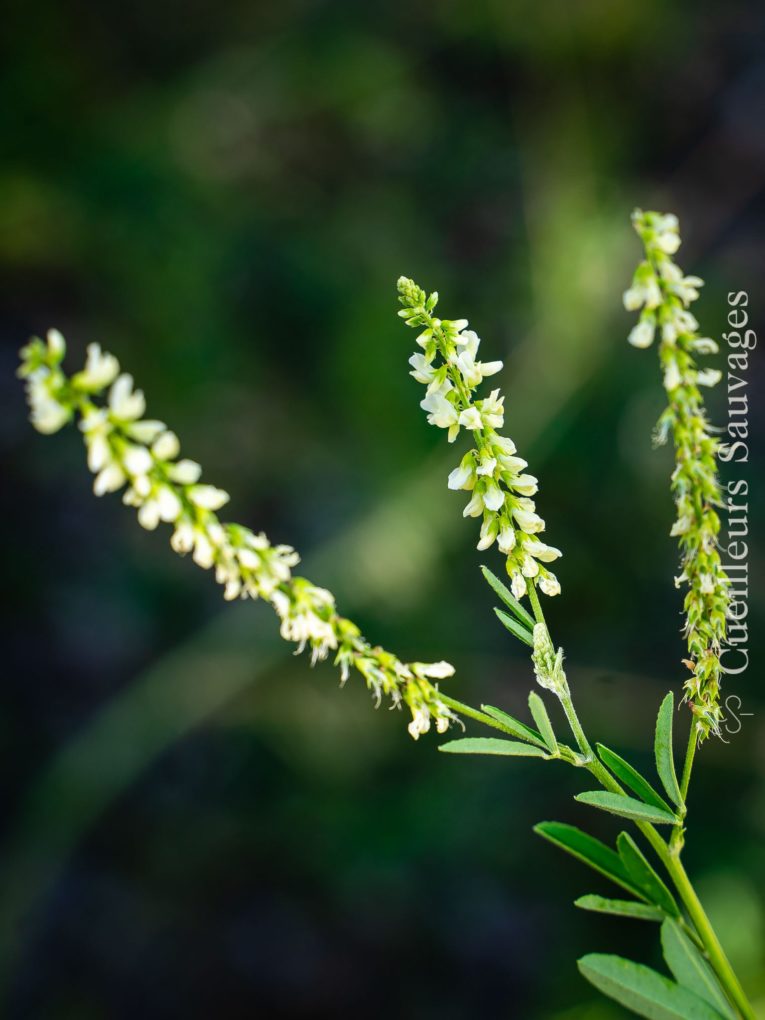
Melilot is a staple of wild food cooking thanks to the coumarins it contains. As we shall see, they give it a gentle flavour that enhances many sweet and savoury dishes. We will focus on white melilot here, but its relative, yellow melilot, is used in the same way.
Usually, a plant’s common name varies from region to region, while its scientific name is more consistent. With this member of the Fabaceae, the reverse is true: in French, it is almost always called mélilot, yet there are no fewer than 13 synonyms for its scientific name! Thus, the Swiss flora calls it Melilotus albus, while in France it is listed as Trigonella alba [4].
Distribution and habitats
White melilot’s native range includes the temperate regions of Eurasia, Asia as far as Myanmar and, in Africa, Ethiopia and South Africa. It has been introduced to many other countries, including Japan and the United States, as well as countries in South America [6].
As the map below shows, it is very common throughout France and Switzerland, with Brittany being a slight exception [1].
This common herbaceous plant needs plenty of light and grows in warm, sunny places with soils low in organic matter. Although it is found mainly in lowland areas, melilot can grow at altitudes of up to 1800 m. It is often considered an arable weed and can easily turn up in the garden.
You can find it along sunny pathsides in summer, from June to August, when it flowers.
Identifying white melilot
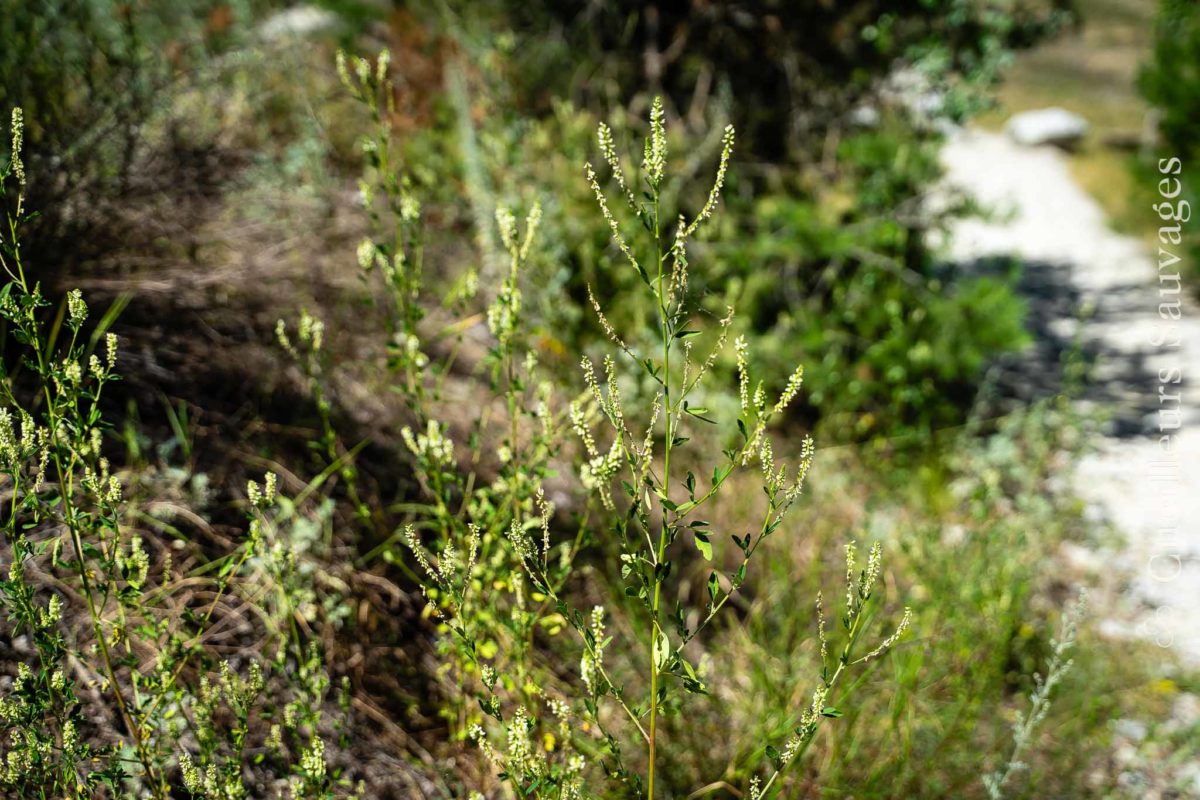
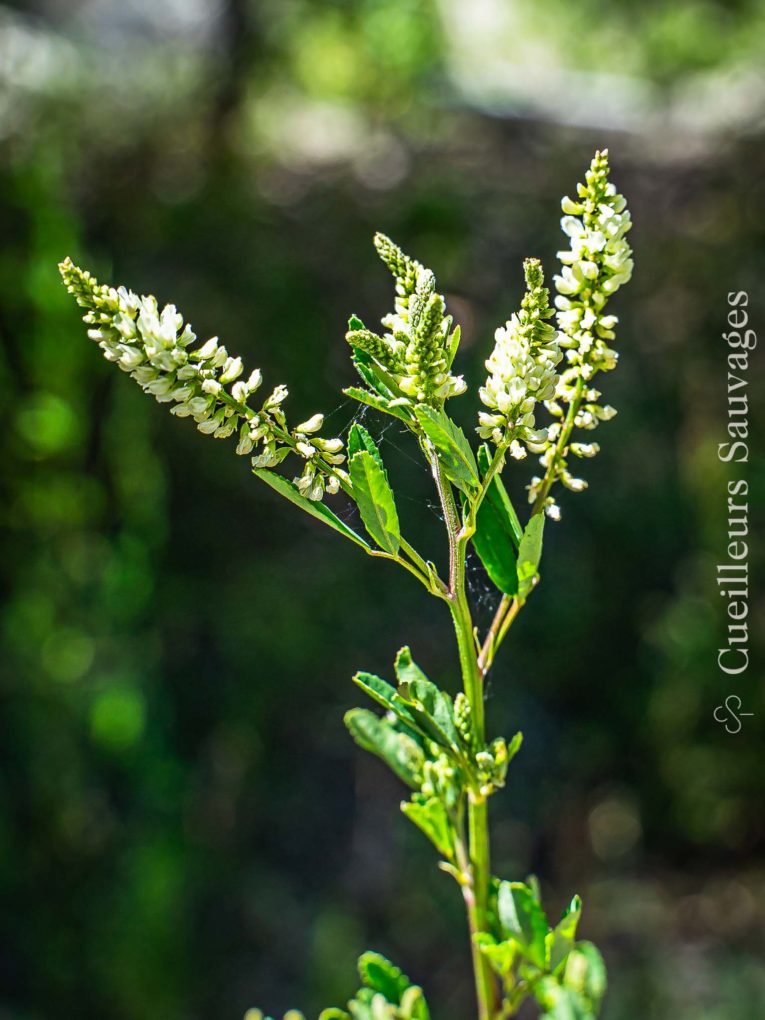
As melilot is harvested when it is flowering, it is easy to recognise if you look for the following features:
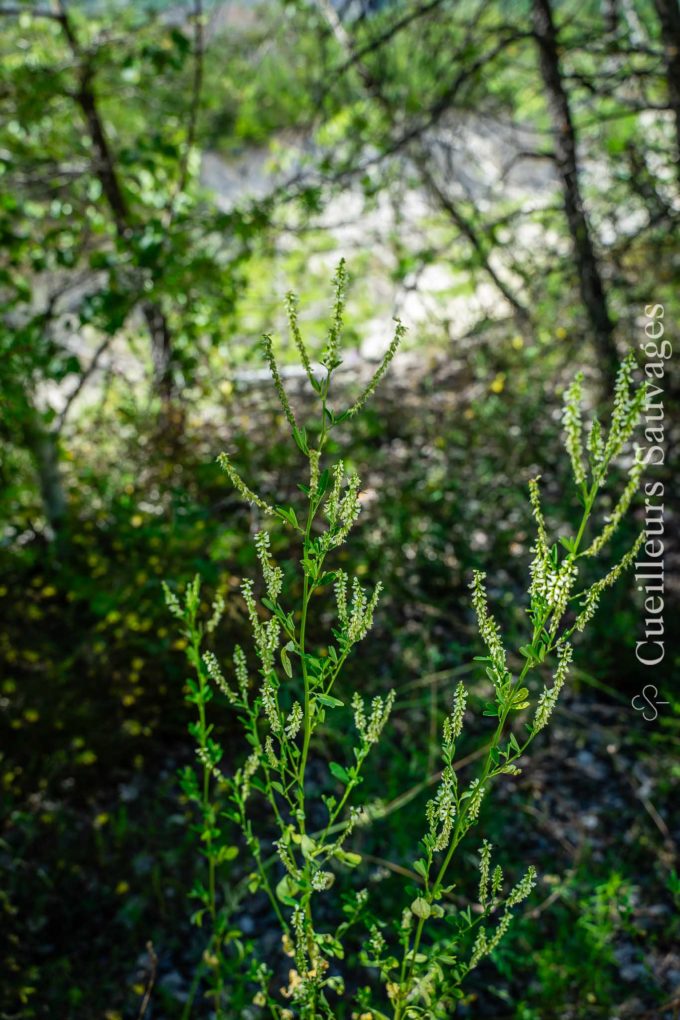
It is an annual or biennial herbaceous plant that can grow up to 150 cm tall. The main stem branches from the base, and secondary stems, arranged alternately, bear clusters of 40 to 80 small white flowers. Despite its height, the plant has a slender, delicate appearance.
The white flowers are typical of the Fabaceae: they are papilionaceous, shaped like small butterflies. The corolla of each flower measures up to 5 mm in diameter. When fully open, the flowers have a distinctive, very pleasant honey-like scent.
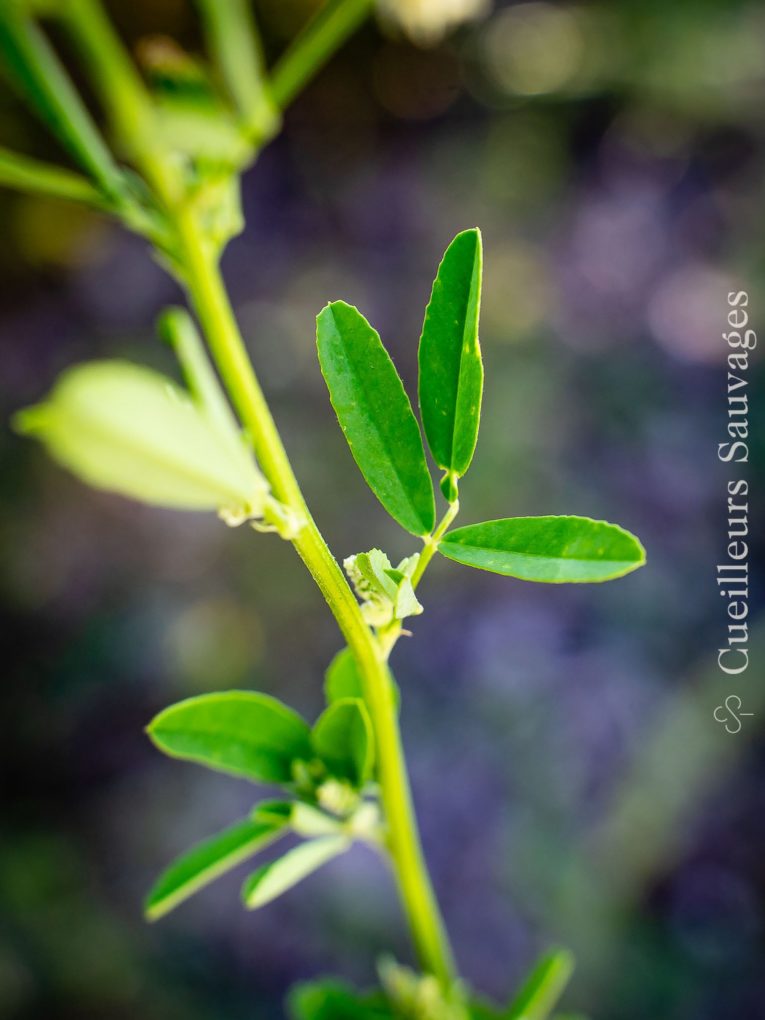
The leaves are made up of three leaflets, 1 to 2 cm long and slightly toothed.
Possible confusion
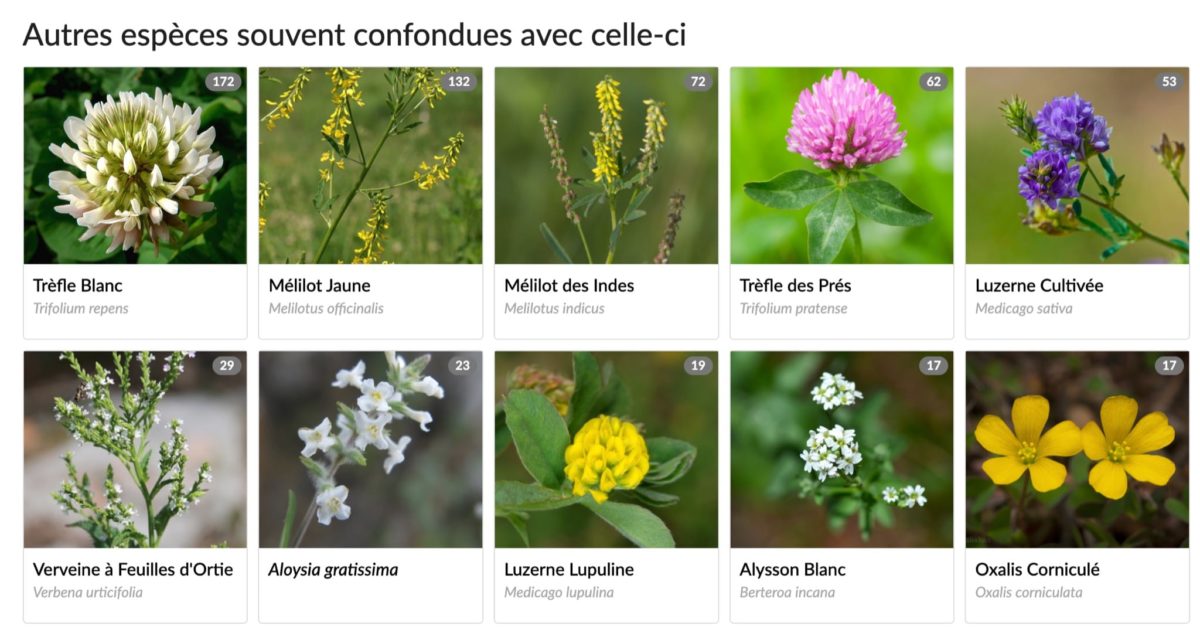
With all these features in mind, you should have no trouble identifying it. According to the iNaturalist app [2], it is most often confused with other members of the Fabaceae. Most also have trifoliate leaves and papilionaceous flowers, such as white clover (Trifolium repens) or alfalfa (Medicago sativa). All the plants mentioned below that occur in Europe are edible.
The species that most closely resembles it is yellow melilot (Melilotus officinalis), which is used in the same way. Without flowers, the two are difficult to tell apart, but once they are in bloom, the distinction is easy: yellow melilot has yellow flowers rather than white ones.
Harvesting and drying
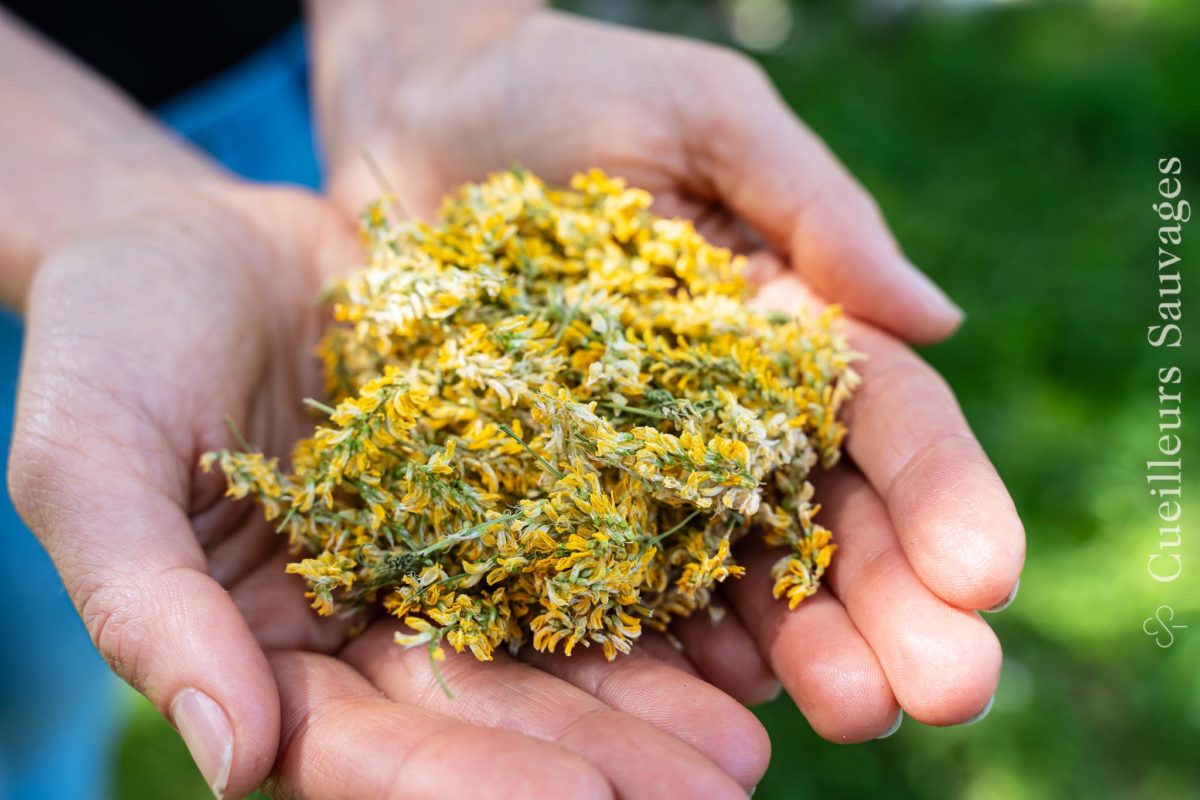
Harvesting takes place during the flowering period, from June to August. The flower clusters are gathered and dried. Plants containing coumarin are more fragrant once dried. Take care to dry them quickly so that their aromatic compounds are preserved and do not deteriorate. A poorly dried plant could become somewhat toxic; this is discussed further below.
It can be stored in jars, away from light, for about two years.
Cooking with melilot
Coumarin is a molecule whose scent is often compared to vanilla. It gives a distinctive, rich, warm aroma and flavour. This active compound is also found in sweet woodruff and sweet vernal grass. These three plants can therefore be used in much the same way.
If you like sweet woodruff, you’ll love melilot! Its less herbaceous scent is more floral and even more intense.
When getting to know a new plant, we suggest starting with a herbal tea. This gives you an idea of the aroma, flavour and colour the plant can bring to your cooking. A melilot infusion has a very pleasant flavour and might have sedative effects.
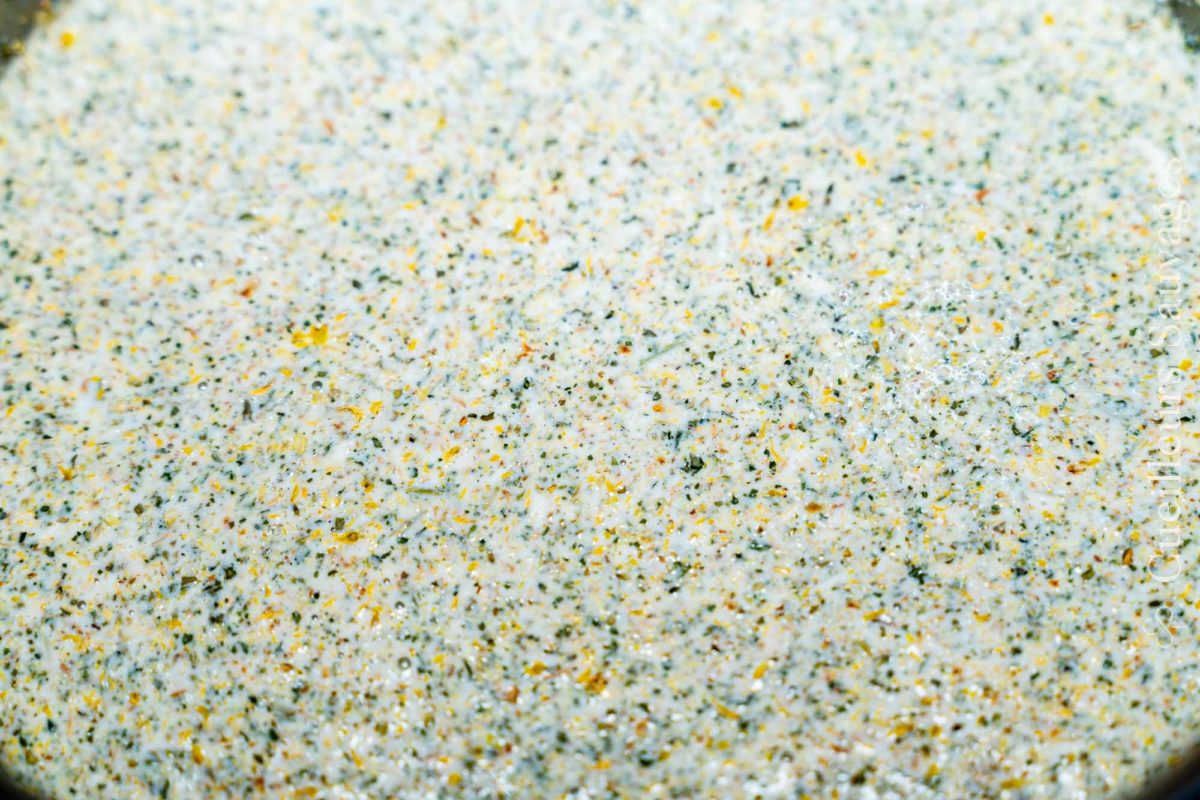
Melilot infuses wonderfully into fats and dairy products. You can gently infuse it in milk or cream to flavour all sorts of delicious desserts: panna cotta, crème brûlée, crème anglaise… You can bring the liquid to the boil or infuse it at a lower temperature; the important thing is to cover it well and not leave it on the heat for too long. You can also infuse it cold for longer, overnight for example.
Plants containing coumarins can also flavour savoury dishes, for example when included in a parcel of vegetables or meat.
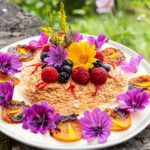
Floating island with melilot and herb-roasted apricots
Floating island with melilot and herb-roasted apricots: a plant-inspired recipe, poetic and wild.
Melilot toxicity
Plants containing coumarins have some toxicity due to this molecule. We have written a detailed article if you are interested in the subject, and summarise the key points here.
Melilot therefore contains coumarin, which can be toxic in high doses: headaches and digestive problems, and suspected liver toxicity. Some of its derivatives pose a risk of bleeding.
Furthermore, if melilot ferments under anaerobic conditions and at a high temperature (between 40 and 50 °C), a fungus, Aspergillus, can convert coumarin into toxic dicoumarol, creating a risk of bleeding. Contrary to what you may read, it is very unlikely that these conditions would occur during drying [9].
Recommendations
Avoid melilot:
- If you have circulatory problems or are taking anticoagulants [7].
- If you have liver problems [8].
- If you are pregnant [8].
Take care to dry melilot at a temperature below 50 °C.
Recommended quantities
The oral dose of melilot recommended by the European Medicines Agency is 2.0–2.4 g, equivalent to two level teaspoons per day and 10 mg of coumarin per day [10].
This recommendation is for medicinal use. In cooking, the quantities are generally smaller, but it can still give you an idea.
Références
- [1] Carte de répartition de Melilotus albus, GBIF | Global Biodiversity Information Facility, 2010-2025.
- [2] iNaturalist, Melilotus albus.
- [3] Infoflora, Melilotus albus.
- [4] WFO Plantlist Melilotus albus
- [6] Kew garden, Plants of the world online, Melilotus albus.
- [7] Zaharieva, M., Dimitrova, L., Philipov, S., Nikolova, I., Vilhelmova, N., Grozdanov, P., Nikolova, N., Popova, M., Bankova, V., Konstantinov, S., Zheleva-Dimitrova, D., & Najdenski, H., In Vitro Antineoplastic and Antiviral Activity and In Vivo Toxicity of Geum urbanum L. Extracts, Molecules, 2021; 27.
- [8] Najmanová, I., Doseděl, M., Hrdina, R., Anzenbacher, P., Filipský, T., Říha, M., & Mladěnka, P. , Cardiovascular effects of coumarins besides their antioxidant activity, Current topics in medicinal chemistry, 2015; 15 9.
- [9] Bye A, King HK., The Biosynthesis of 4-Hydroxycoumarin and Dicoumarol by Aspergillus fumigatus Fresenius, Biochem J, 1970 Apr;117(2):237-45. doi: 10.1042/bj1170237. PMID: 4192639; PMCID: PMC1178855.
- [10] Final assessment report on Melilotus officinalis (L.) Lam., herba, Europenan Medicines Agency, 2018



5 comments
✍️ Leave a comment






29 November
Les Pléiades
- Marie Mellioret

Making a Christmas star Sold Out
Lally railway station, car park, Blonay, Switzerland.
04 April
La Sarraz
- Michaël Berthoud

Wild edible and medicinal spring plants in La Sarraz
La Sarraz football pitches car park. Route de Cossonay.
10 April
Les Pléiades
- Michaël Berthoud

Natural incense stick-making workshop
Lally railway station, car park, Blonay, Switzerland.
No events found.
Hello,
I’m amazed by the medicinal power of melilot when made into a balm. After I had a prosthesis fitted to my right leg, my left leg swelled terribly, but I healed it very quickly with my white melilot balm, and several friends have also noticed rapid improvements. I’m going to try it on the varicose veins I got from that operation! I’d been looking for it everywhere and, luckily, a field that had been regenerated with various plants—wild oregano, yarrow, etc., and melilot—was full of it. What a joy to pick it and make this balm! Then the flowers faded and the fruit appeared, green or dry. It has more beneficial properties than the flowers, especially for the balm. Did you know that? The herbal tea is delicious! I’ve also noticed that if you pick it, it flowers again. Have you noticed that too? I’m planning to make a melilot crème brûlée!
Author
Hello Josiane,
Thank you for sharing this inspiring experience! It’s fascinating to see all that melilot can offer, both for care and in cooking. Your creativity and enthusiasm are wonderful! We’ve never tried the fruits, and it’s true that many plants continue to grow and flower even after they’ve been picked ^^
Happy exploring!
Michaël
How do you make this balm, please?
Hello,
Do you know whether Melilotus italicus can also be used in cooking?
Have a good day.
Author
Hello,
Unfortunately, I’m not familiar with it, and its use is not particularly well documented… It would need more thorough research. I’ll keep the idea in mind for later.