



Log in
Harvesting common valerian, Valeriana officinalis
Michaël Berthoud
/
12 October 2017
Common valerian (Valeriana officinalis) is known for its root, which has long been used when sleep is hard to come by. But in the wild, it is most easily recognised by its opposite leaves and clusters of small pink or white flowers. Its young leaves have even found their way into salads.
Modern life moves fast, very fast. It’s not always easy to find a rhythm between work, various commitments, family and leisure… Sleep can quickly suffer, making anxiety and insomnia worse. This can lead to a vicious circle that is sometimes hard to break.
Common valerian
Common valerian is a perennial plant in the Caprifoliaceae family. In Switzerland, the name also refers to a group of several closely related valerian species. Some grow taller than an adult, reaching 1.80 m. Their small flowers, ranging from pink to white, form dense, slightly domed clusters at the top of the stem. They give off a distinctive smell, unpleasant to some and pleasant to others[1].
Personally, I love it! It’s a plant I’m very fond of, one of my ‘guide plants’ — plants with which I’ve developed a special relationship over the years.
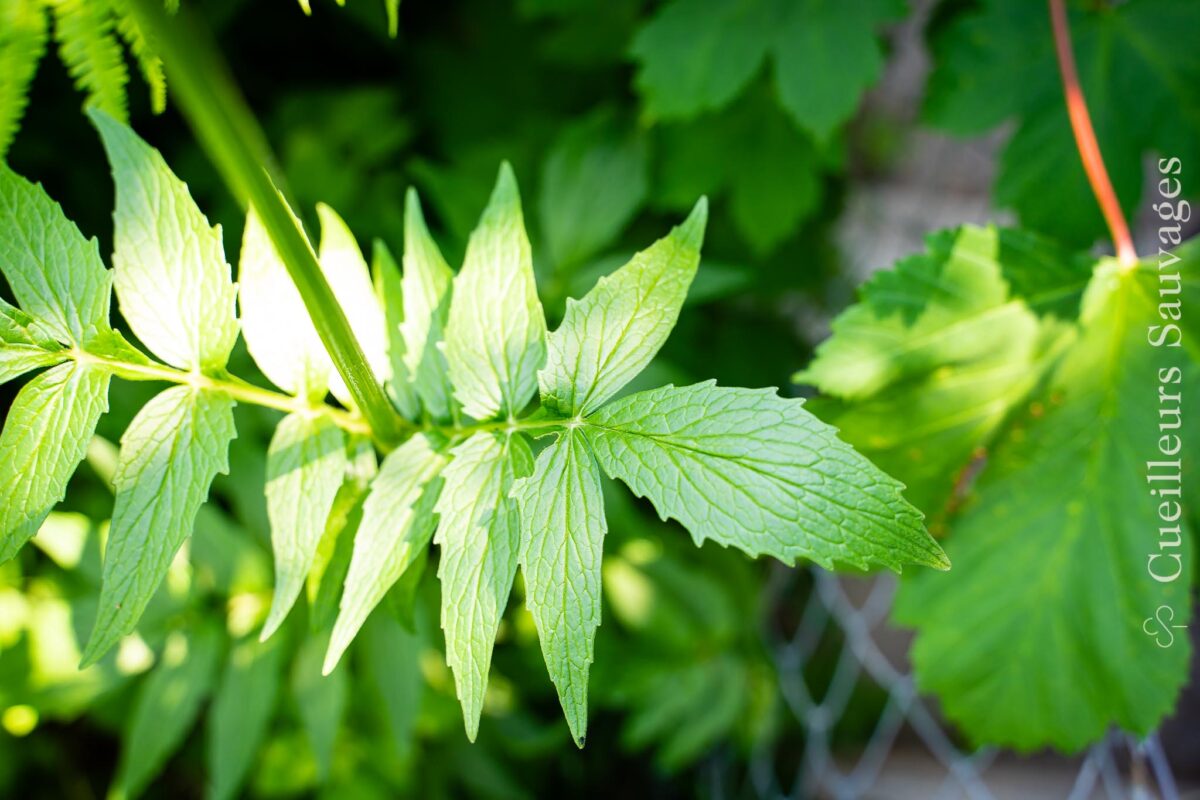
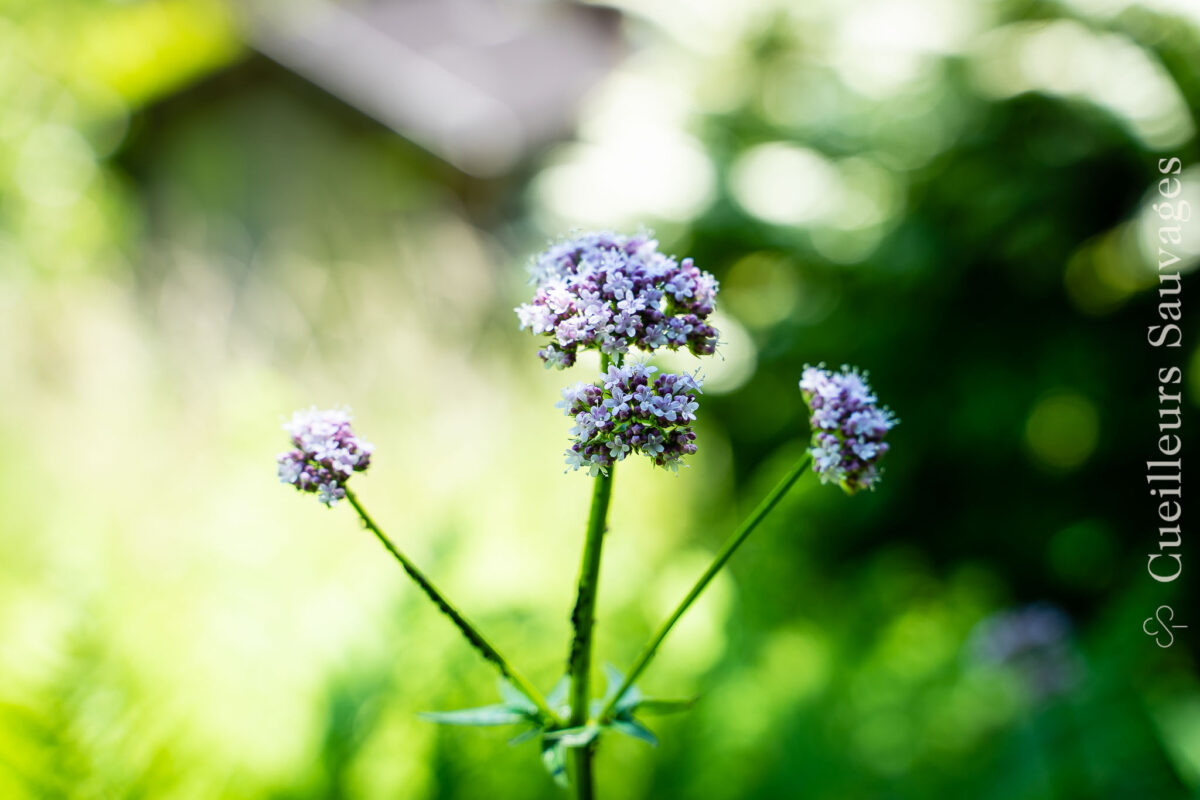
Near my home, it grows in cool, damp woodland spots: along rivers and streams, and beside little-used paths.
To observe it, follow a stem with your eyes from bottom to top. The leaves grow in pairs, opposite one another, and become progressively smaller higher up. On the lower leaves, the leaflets line up on either side of a central axis, with a final leaflet at its tip. Return after flowering: where each small flower was, you’ll find a fruit topped with a tuft of feathery bristles[1].
Can you eat valerian leaves?
In the Bologna area of Italy, people still remember a simple way of using common valerian: eating its leaves raw in salads, preferably when young. Local residents described this in an ethnobotanical survey published in 2024. The authors clearly distinguish common valerian from lamb’s lettuce (Valerianella locusta), which is also eaten in salads and sometimes has very similar local names[2].
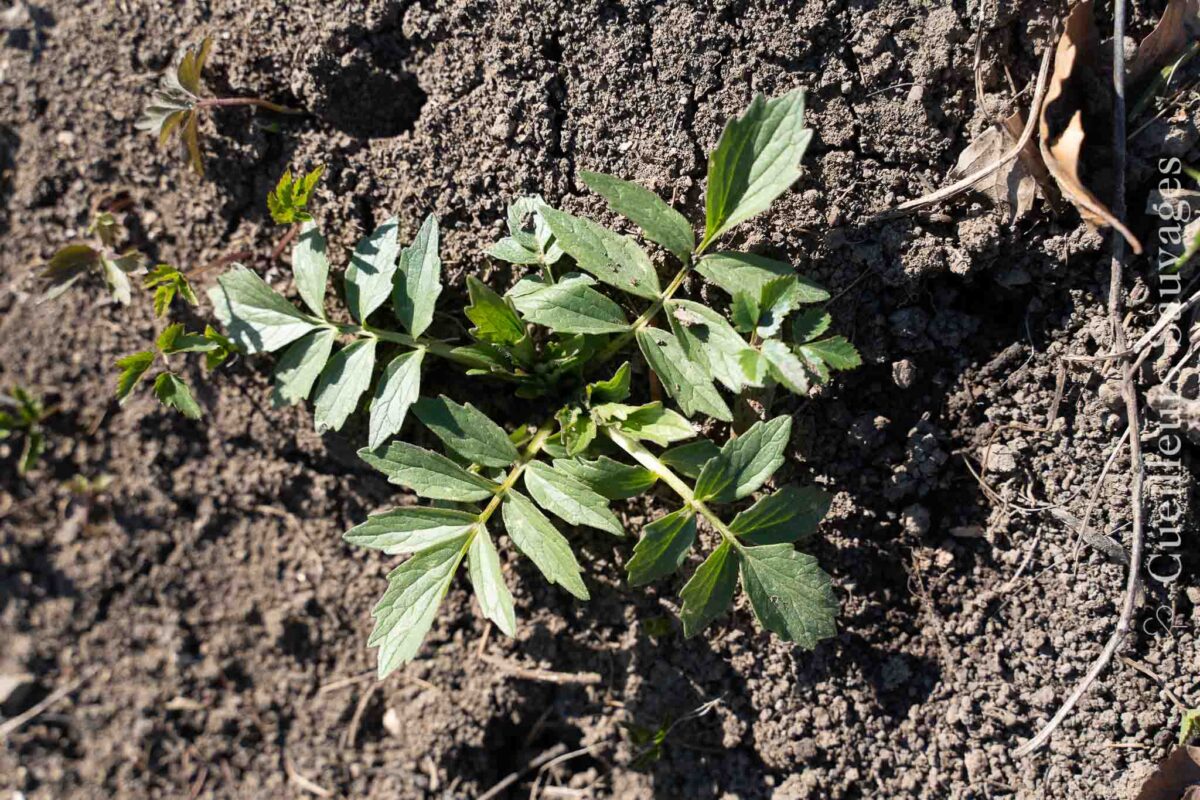
We love eating them in spring, when they are still young and less than 15 cm tall. We pick the young basal rosettes close to the ground. At this stage, they have a delicious nutty flavour and make a wonderful addition to wild salads. Once they grow beyond that size, they can sometimes become bitter; you have to taste them to find out.
If you would like to try the leaves, first identify the plant when it is in flower, then return to look for the young shoots the following season. You can pick a few leaves while leaving the plant’s base in place.
Valerian root and sleep
Its use goes back a long way: in the second century CE, the Greek physician Galen was already prescribing valerian for insomnia[3]. The part prepared is underground: a short rhizome, or underground stem, surrounded by numerous fine roots. As it dries, it develops a very strong smell. It is used in herbal tea, alcoholic macerations and as a dry extract, among other preparations[3, 4].


What do we find when we look at a night’s sleep? In 2024, researchers compared eight reviews on this question. In some trials, participants who had taken valerian said they had slept better. However, sleep measurements did not show a sufficiently consistent improvement to conclude that valerian is an effective treatment for insomnia[5].
The preparation matters too. A 2020 review found more consistent results for sleep quality with the whole root and rhizome than with the various extracts tested[6]. For mild nervous tension and sleep disorders, the European Medicines Agency recognises the use of a specific dry extract obtained using ethanol. A homemade tincture has a different composition[4].
A few precautions
Valerian may cause nausea or abdominal cramps. If it makes you drowsy, avoid driving. It is also best not to combine it with alcohol or sedative medication without medical advice. Medicinal use is not recommended during pregnancy or breastfeeding, or for children under 12[4, 7].
A video field trip



2 comments
✍️ Leave a comment






29 November
Les Pléiades
- Marie Mellioret

Making a Christmas star Sold Out
Lally railway station, car park, Blonay, Switzerland.
04 April
La Sarraz
- Michaël Berthoud

Wild edible and medicinal spring plants in La Sarraz
La Sarraz football pitches car park. Route de Cossonay.
10 April
Les Pléiades
- Michaël Berthoud

Natural incense stick-making workshop
Lally railway station, car park, Blonay, Switzerland.
No events found.
I’d like to start gathering plants for medicinal herbal teas... without getting it wrong. There’s so much to learn. Thank you for this valuable, expert information.
Author
My pleasure, and thank you for your comment! ^^ 🌿