



Log in
Morning rose hip smoothie
Michaël Berthoud
/
15 November 2025
When the hedgerows turn red, a walk can easily continue into the kitchen: ripe rose hips become the base for a comforting smoothie that is fruity, sweet and spicy.
Did you know that rose hips, the fruits of wild and ornamental roses, are easy to use? A fine-mesh strainer and a blender are all you need to make delicious drinks rich in vitamins and antioxidants.
The most common method is to use a food mill to make a flavourful pulp. We make it every year; it’s a fantastic method, but it takes some preparation time and a fair amount of fruit. To learn more about cooking with and identifying this fruit, you can explore it as part of our online course on foraging and wild food cookery!
The recipe we’re sharing here involves just a few quick, simple steps: choose fully ripe fruit, blend it with a touch of spice, thin it with a carefully chosen herbal tea, then strain it finely for the perfect texture.
Straining out the hairs and achenes
We’re often asked about the ‘stinging’ hairs. Inside rose hips are two things: achenes, or ‘beige seeds’, and numerous hairs known as ‘itching hairs’.
These hairs do not sting (unlike those of the stinging nettle), but they can irritate the mucous membranes and your hands when handled. It is therefore advisable not to rub your eyes after handling them, to strain them out properly and to avoid eating rose hips whole.
Some people worry that swallowing these hairs may be harmful and irritating to the digestive system. This could be true if large quantities of unstrained fruit are consumed, or if the fruit is eaten whole. However, we have found no scientific study confirming this claim.
If a small amount of hair ends up in your smoothie, as is often the case, it is unlikely to pose a risk. What’s more, if your strainer is fine enough and has a double mesh, the hairs will be strained out.
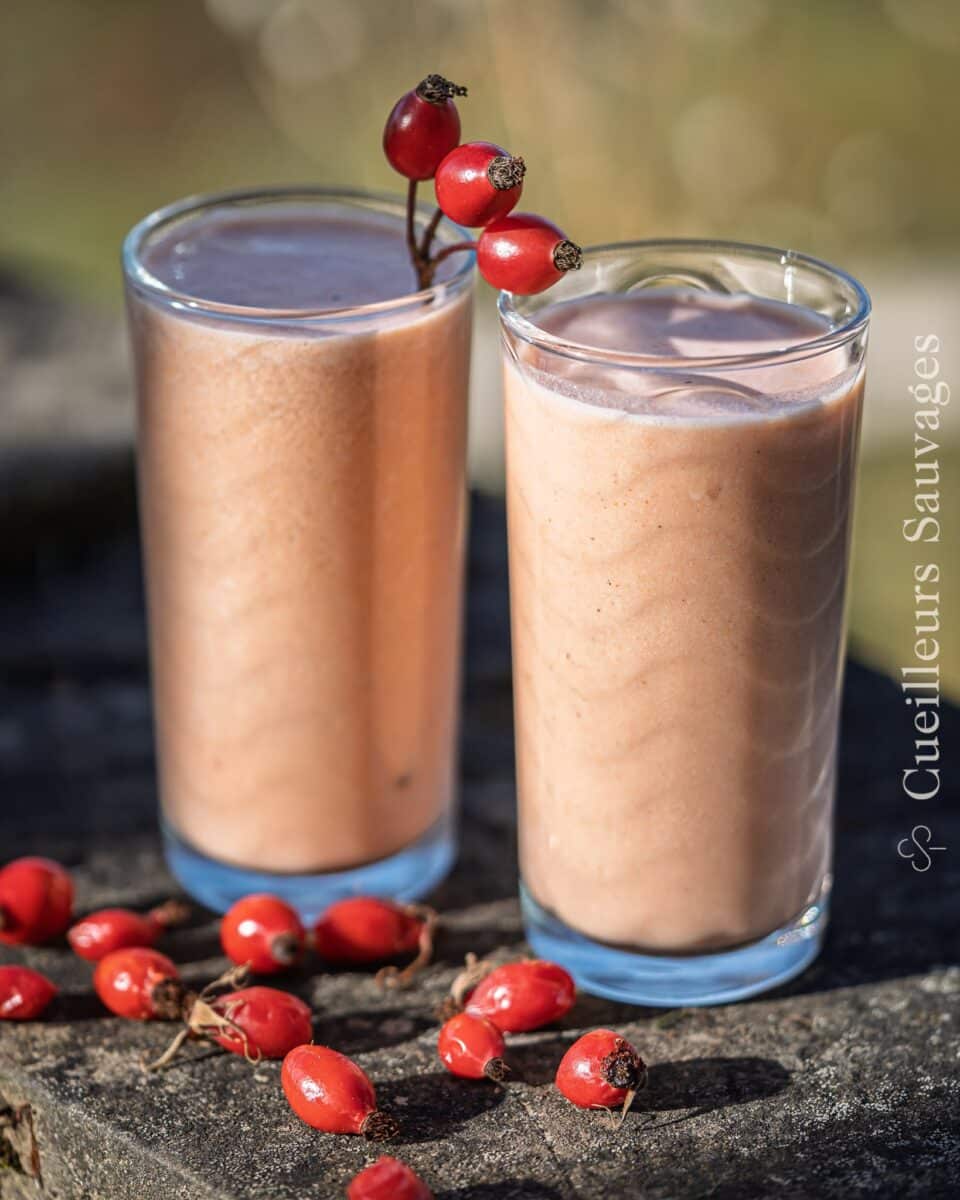
A few tips for straining this smoothie:
- Choose overripe fruit: opt for fully ripe, soft rose hips, which are easier to blend and strain and give a much better result. At this stage of ripeness, the pulp can be extracted with little effort.
- Blend thoroughly: blend the rose hips with the other ingredients until smooth before straining; prolonged blending reduces coarse bits.
- Use a fine, double-mesh strainer and press well: pour the mixture into a very fine strainer, then press it with a spoon to trap the hairs and achenes. Take the time to press it through until you have a smooth purée. This step ensures a silky, pleasant smoothie.
Our own tips
To increase the benefits and make straining easier, we add a herbal tea to the smoothie. Here, we suggest a infusion of stinging nettle and mint, but you can use any other plant.
Our second tip is to collect the pulp left in the strainer and make a infusion with hot water. This gives you a second, milder drink while making the most of the fruit’s beneficial properties.
If the achenes remain in the residue, avoid putting it in the compost if you don't want to risk rose bushes springing up in your vegetable garden!
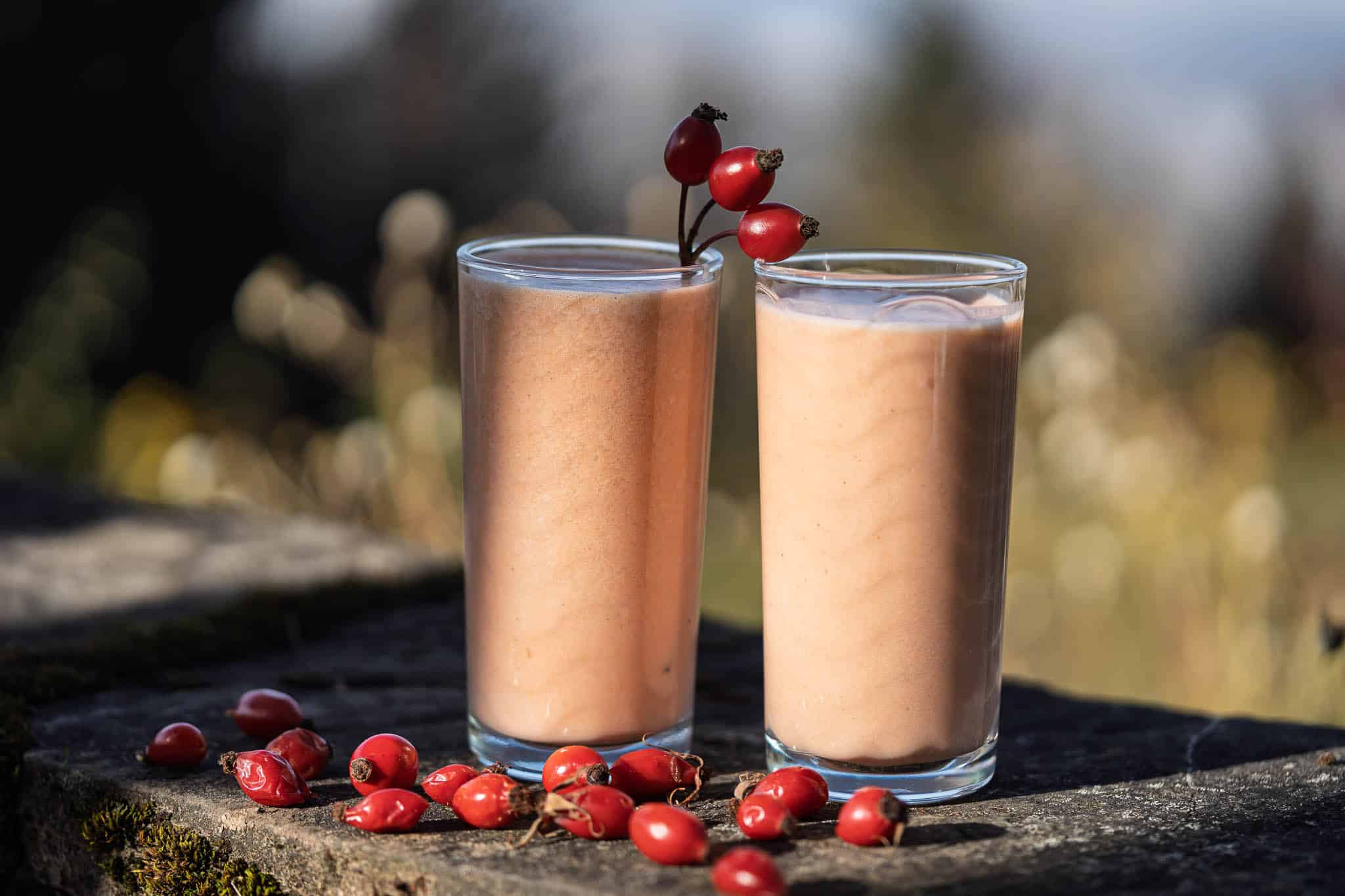
Morning Rose Hip Smoothie
A rose hip, banana, cinnamon and ginger smoothie topped up with a mint–stinging nettle infusion: a simple, vitamin-rich, silky-smooth recipe, ideal for a natural and delicious morning ritual.
Equipment
- 1 Blender
- 1 fine-mesh double-mesh strainer
Ingredients
- 20 Very soft rose hips
- 1 Banana
- 1 tsp of cinnamon
- 1 tsp Ground or grated ginger
- 1 Half a cup of homemade herbal tea e.g. mint + stinging nettle
Instructions
- Gather and quickly trim the rose hips if needed, then place them in the blender.
- Add the banana, cinnamon and spoonful of ginger.
- Pour in the warm or room-temperature herbal tea (mint–stinging nettle) to add herbal notes and help achieve the right consistency.
- Blend until very smooth.
- Strain through a fine-mesh strainer, pressing firmly to separate the pulp from the hairs and achenes.
- Serve immediately.
Notes
We don’t throw away the leftovers; we steep them again in hot water to enjoy their benefits as a herbal tea.



2 comments
✍️ Leave a comment






29 November
Les Pléiades
- Marie Mellioret

Making a Christmas star Sold Out
Lally railway station, car park, Blonay, Switzerland.
04 April
La Sarraz
- Michaël Berthoud

Wild edible and medicinal spring plants in La Sarraz
La Sarraz football pitches car park. Route de Cossonay.
10 April
Les Pléiades
- Michaël Berthoud

Natural incense stick-making workshop
Lally railway station, car park, Blonay, Switzerland.
No events found.
Hello, why can’t we receive this PDF guide if we’re already subscribed to your newsletter???
Author
Hello,
The PDF was sent to you in the welcome email when you subscribed. I’ll email it to you again!