



Log in
Toxicity of wild chervil leaves, Anthriscus sylvestris
Michaël Berthoud
/
7 May 2026
Wild chervil (Anthriscus sylvestris) has long been considered partially edible by many foraging enthusiasts. Yet recent scientific research points to possible toxicity even in its leaves. Discover why this potent plant calls for the greatest caution.
Table of contents
I thank Professor Cuendet, professor of pharmacognosy at the University of Geneva, for reviewing this article and advising me on the recommendations concerning consumption of this plant.
Introduction
We now have new information about the possible toxicity of wild chervil, Anthriscus sylvestris. If you already forage for it or are thinking of doing so, we advise great caution.
Wild chervil is related to the familiar garden chervil (Anthriscus cerefolium). Both species belong to the botanical genus Anthriscus. There are several species of chervil worldwide, around a dozen in all.
It is important to stress that this is certainly not a plant for beginners; identifying wild chervil requires advanced botanical knowledge. We previously wrote a detailed article on how to identify it, which included a recipe that we have now removed.
It is also worth noting that opinions on the internet and social media, as well as interpretations of the sources, differ on whether this plant is edible. That is why we decided to have this article reviewed by an academic specialist.
Little-known possible toxicity of the leaves
When I began foraging, wild chervil did not feature much in books for the general public, and there was little accessible information about it. The commonly held view was that the plant’s beautiful aerial parts were edible, while the root was said to be toxic because it supposedly contained a molecule that prevents cell division.
This is the information that appeared, and still appears today, almost everywhere. I passed it on myself in the past when I wrote an article about the plant that included a recipe using its leaves. In an ideal world, I would have given you the criteria for foraging it and some interesting recipes.

However, last year I had the good fortune to do some botany with a highly experienced botanist friend. When we were discussing whether this plant was edible and how I used it, she alerted me to the fact that the leaves are toxic too. I was surprised, and she gave me a reference that I promptly studied: Professor Reduron’s monographs on the Apiaceae of France [1]. An expert on the Apiaceae, he wrote five highly detailed, well-documented and thoroughly referenced volumes on these plants.
Looking at the biochemical composition of wild chervil, we find that the toxic molecule is also present in the leaves. Professor Reduron himself describes it, and I quote, as “of questionable edibility”.
This prompted me to research the plant further. Delving into the scientific literature, I discovered that Anthriscus sylvestris has been studied for more than 20 years for possible anticancer effects, and that the potential toxicity of its leaves has therefore been known for that long, and even longer, as we shall see.

Doubts dating back to the 19th century
To our knowledge, there are currently no known cases of poisoning in humans.
Nevertheless, some ethnobotanical research shows that doubts about eating it date back to at least the 19th century. Cases of poisoning in livestock have indeed been reported, for example in an 1887 book on poisonous plants[19]:
According to Rodet and Baillet, other animals might also eat it without ill effects. However, Kohli, a veterinarian from Hanover, published an account of the poisoning of a herd of pigs that had been grazing on wild chervil [another name for cow parsley, also called wild chervil in French]. They developed paraplegia, had dilated pupils, refused all food and showed signs of enteritis. Four pigs died, and their post-mortem examinations revealed severe gastrointestinal inflammation.
The discovery of cytotoxic molecules in this wild chervil, such as deoxypodophyllotoxin, dates back to the 1940s[6]. Although the “active principle was not yet known”, two authors classified the plant among the poisonous members of the Apiaceae in 1967[20].
More recently (2007), as we have seen, Reduron considers it suspect[1]; the Plants For A Future database advises caution in its use[21]. Store norske leksikon, a Norwegian scientific encyclopaedia written by academic specialists, considers wild chervil “slightly toxic to humans”[22].
A plant with little traditional use…
This plant is eaten by people who can identify it, and there are records of its use in Eastern Europe, Turkey, Bulgaria and Serbia, and as far afield as Asia, including Japan[2-3-4-5-6-7].
In Europe, and especially in Asia, it is also used as a medicinal plant: as an antitussive, antipyretic, analgesic, diuretic, tonic, digestive aid and antihypertensive, among other uses. The plant’s aerial parts (leaves and stems) are used for their anti-inflammatory properties[2].
Notably, we found a report that in Russia it was used as an abortifacient[6]… which is significant, as we shall see.
Nevertheless, these uses are not widespread, and there is little experience to draw on regarding its use by the public. It is not eaten as widely as dandelion, stinging nettle or wild garlic.
Beyond the historical evidence, it is essential to recall a crucial toxicological principle: traditional use in no way guarantees that a plant is safe in the long term. Generations of observation may reveal some acute toxic effects (such as illness or poisoning), but they are not enough to detect chronic or latent toxicity.
Our ancestors would have found it difficult to link cellular, liver or kidney damage caused by the gradual accumulation of toxic compounds over several years to eating a plant.
Relying on the fact that a plant ‘has always been eaten’ as proof that it is metabolically safe is therefore a scientific shortcut that is now outdated.
… but now in fashion
What troubled us was that, when we looked into the subject in the popular science books available to us, we found no mention of this possible toxicity in the leaves. I even read in a book published in 2022[13] that its biochemical composition was still unknown, which no longer seems accurate today.
There are also numerous YouTube videos promoting the consumption of this plant’s leaves, with tens of thousands of views… again, without any advice on using the leaves.
It therefore seems that this information about the possible toxicity of the leaves has not passed from scientific research to science communicators and then to the general public.
The message is always the same: ‘Only the root contains a toxic compound.’ However, as we shall see, this claim is now known to be incorrect.
Current knowledge
Deoxypodophyllotoxin and other lignans
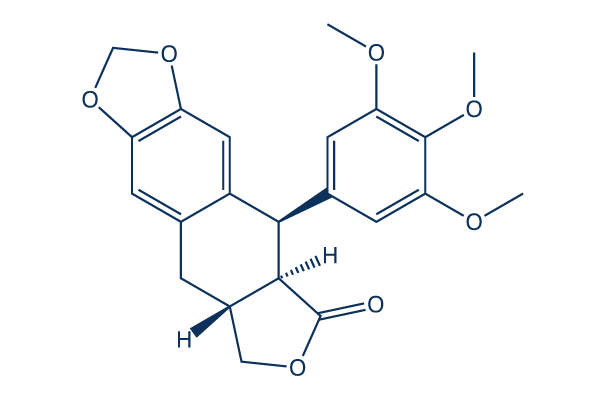
Phytochemical analyses show that the toxicity is due to the presence of lignans such as anhydropodorhizol and yatein, and chiefly deoxypodophyllotoxin (DPT). We will focus mainly on the latter, but it is a group of compounds that gives wild chervil its properties.
According to the literature, DPT levels can reach up to 17.3 mg/g in the roots and up to 4.0 mg/g in the leaves[4]. This toxin is therefore also present in the leaves, contrary to what you may read.
Surprisingly, the fruits contain a particularly high concentration of this toxin. A recent study measured a DPT concentration of 24.5 mg/g in dried fruit, equivalent to nearly 2.45% of the fruit’s biomass. The authors measured DPT concentrations in the fruits between 39 and 389 times higher than those in the roots and leaves[14].
What is more, the toxin behaves unusually: young leaves contain more of it than older leaves[4]. Yet it is precisely these young parts that are generally favoured for eating!
In short, DPT is found throughout the plant, at concentrations that vary considerably and are sometimes particularly high, including in the aerial parts. This contradicts the idea, popularised in books for general readers and on social media, that only the root poses a toxic risk.
| Plant part | Amount of deoxypodophyllotoxin according to various sources |
|---|---|
| Roots | 0.08–17.3 mg/g (dry weight)[4] |
| Aerial parts | 0.01–4.0 mg/g (dry weight)[4] |
| Fruits | 24.5 mg/g (dry weight)[14] |
An anticancer compound… but potentially toxic
We often hear that wild chervil is being studied as a cancer treatment, which sometimes leads people to think, wrongly, that it must be excellent for their health. The pharmacological reality is quite different.
Wild chervil contains DPT, a precursor of podophyllotoxin. Although the pharmaceutical industry uses these natural molecules as ‘building blocks’ to make chemotherapy drugs (such as etoposide), their use in their unprocessed form as medicines has historically been abandoned. As the authoritative review by Gordaliza et al. (2000) explains, neither DPT nor podophyllotoxin can be used as an internal remedy because their therapeutic window is virtually non-existent: the effective dose is dangerously close to the toxic dose[16].
This high toxicity is explained by their very low selectivity[11]. DPT blocks cell division and causes oxidative stress, as well as various types of programmed cell death (apoptosis, necroptosis, parthanatosis)[8, 9, 10]. While attacking cancer cells, it also harms healthy cells, which can cause numerous side effects.
Given this level of toxicity to healthy human cells, the abortifacient effect traditionally reported in Russia has a very probable pharmacological explanation.
Toxicity demonstrated in some animals
As we have seen, cases of livestock poisoning have been reported.
Data on dietary toxicity in humans or large mammals are lacking, but the molecule has been tested in vivo in several animals in toxicity studies (often by intravenous administration or as a short-term treatment), showing possible toxicity[17].
A 2016 ecotoxicology study[15] tested the lethal effect of leaf extracts on Daphnia magna (an aquatic bioindicator). Although this is not a model of mammalian digestion, it suggests that the leaf extracts have biocidal activity under the study conditions.
The ethanol and water/ethanol extracts proved lethal, even at low doses. The aqueous extract proved lethal, but only at the highest concentration.
This study demonstrates that, in addition to the in vitro toxicity of DPT to animal cells, the leaves of Anthriscus sylvestris are toxic to certain living organisms.
What the specialists say
To help us make sense of this complex subject, we felt it was important to seek the views of people with expertise in the plant’s phytochemistry and pharmacology. We therefore contacted two specialists.
In 2025, we contacted Dr Orčić, a professor at the University of Novi Sad in Serbia, a biochemist specialising in food, among other fields, and the author of numerous studies on this plant.
He was very surprised to learn that the plant was being discussed in popular guides and eaten in the French-speaking community!
And he confirmed the following:
“The whole plant is certainly very rich in extremely potent compounds. I would not risk eating it directly. Water-based extracts (soups, teas) might be suitable, as the lignans in Anthriscus [sylvestris] (including deoxypodophyllotoxin) are poorly soluble in water, but I think I would prefer to analyse the soup or tea before consuming it…”[12].
However, a word of caution: while a simple infusion limits extraction of the compound, making a blended soup means ingesting the plant tissues containing DPT. The precautionary principle therefore still applies.
A second expert has urged us to be cautious…
More recently, in May 2026, we contacted Professor Cuendet, a professor of pharmacognosy at the University of Geneva. Specialising in oncology, she knows DPT and its derivatives well. She kindly answered our questions by phone and reviewed this article.
She shares the same view on the edibility of wild chervil. She reminded me that, in general, compounds chemically related to podophyllotoxin, including DPT, have a narrow therapeutic window. Because of the lack of clinical data in humans, the precautionary principle should therefore prevail, and consumption of wild chervil should be avoided [18].
The risks of eating wild chervil
What, in practical terms, are the risks of eating the aerial parts of wild chervil? What happens if it is eaten regularly and repeatedly over several years?
In fact, we do not know for certain, because studies of the effects of consuming the whole plant have not been conducted in humans. According to Dr Orčić, this stage of research should begin soon, but it may take time…
We therefore know that the molecule is also present in the leaves and fruits and that it is highly toxic to our cells and certain living organisms, but we do not know exactly what happens to it once ingested.
The toxicity is probably slow to develop, latent and invisible, with no obvious immediate effect. In humans, its effects could therefore include liver, kidney or neurological damage if exposure is substantial, although direct clinical data are limited.
The following questions therefore remain unanswered:
- Cooking: Does DPT withstand cooking, or is it destroyed? If it is destroyed, at what temperature?
- Human metabolism: How is it metabolised by the body? Is it broken down by enzymatic processes during digestion, which would limit its toxicity? Or does it instead survive those processes and cause cellular damage or produce secondary metabolites more toxic than DPT itself?
Only future studies can answer these questions. This is an appeal to the scientific community specialising in these matters. An answer would greatly help us determine whether or not this plant is safe to use.
Recommendations
The question of whether to recommend it, and how much to consume, therefore remains unanswered.
Should wild chervil be treated like plants containing oxalic acid and eaten only in small quantities? Or should it not be eaten at all?
Where uncertainty is supported by scientific evidence and accompanied by a significant risk, the precautionary principle must prevail.
Recommendations
In light of the scientific evidence accumulated on this plant, we advise against consuming any part of wild chervil, Anthriscus sylvestris, until its safety has been demonstrated. Pregnant women must not consume it under any circumstances.
This plant contains pharmacologically active and toxic compounds, and much remains unknown about it. Wild chervil has much to offer, but perhaps not as the vegetable we would like it to be: it could lead to the development of a medicine in the future.
Time will tell whether wild chervil can ever be eaten safely. In the meantime, if you would like to learn more about foraging for wild plants using a rigorous approach, we offer an online course on using wild edible plants.
Références
[1] Jean-Pierre Reduron, Ombellifères de France, Bulletin de la Société Botanique du Centre-Ouest, Volumes 1 à 5. Nouvelle Série Numéro spécial 26. 2007
[2] Fejes S., Blázovics A., Lugasi A., Lemberkovics É., Petri G., Kéry Á., In vitro antioxidant activity of Anthriscus cerefolium L.(Hoffm.) extracts, J. Ethnopharmacology, 2000; 69(3): 259-265.
[3] Park, Kyu Tae et al. , The Vascular Plants in Mt. Bohyeon, Gyeongbuk, Korea, Korean Journal of Plant Resources , 2015, 28(2):193-216, http://dx.doi.org/10.7732/kjpr.2015.28.2.193
[4] Orčić, D., Berežni, S., & Mimica-Dukić, N., Quantitative HPLC–UV Study of Lignans in Anthriscus sylvestris, Molecules, 2022. 27
[5] Kozuharova, E., et al., Wild umbellifers traditionally used for food in Sicily and Bulgaria and their health benefits., BULGARIAN CHEMICAL COMMUNICATIONS, (2025), 27
[6] Berežni S, Mimica-Dukić N, Domina G, Raimondo FM, Orčić D, Anthriscus sylvestris-Noxious Weed or Sustainable Source of Bioactive Lignans?, Plants (Basel), (2024), 13(8):1087
[7] MITSUGI KOZAWA, NOBUKO MORITA, Kiyoshi Hata, Chemical Components of the Roots of Anthriscus sylvestris HOFFM. I. Structures of an Acyloxycarboxylic Acid and a New Phenylpropanoidester, Anthriscusin, Pharmaceutical Society of Japan, (1978), Volume: 98; Issue: 11
[8] Diandong Ma et al. , Deoxypodophyllotoxin triggers parthanatos in glioma cells via induction of excessive ROS., Cancer letters, 371 2 (2016): 194-204 . https://doi.org/10.1016/j.canlet.2015.11.044.
[9] Ah-Won Kwak et al, Deoxypodophyllotoxin, a Lignan from Anthriscus sylvestris, Induces Apoptosis and Cell Cycle Arrest by Inhibiting the EGFR Signaling Pathways in Esophageal Squamous Cell Carcinoma Cells., International Journal of Molecular Sciences, 21 (2020). https://doi.org/10.3390/ijms21186854.
[10] Meijuan Wu et al., Deoxypodophyllotoxin triggers necroptosis in human non-small cell lung cancer NCI-H460 cells., Biomedicine & pharmacotherapy = Biomedecine & pharmacotherapie, 67 8 (2013): 701-6 . https://doi.org/10.1016/j.biopha.2013.06.002.
[11] Sheng Hu et al., Anticancer effect of deoxypodophyllotoxin induces apoptosis of human prostate cancer cells, Oncology letters, 12 4 (2016): 2918-2923 . https://doi.org/10.3892/OL.2016.4943.
[12] Communication personnelle par e-mail avec le Dr Dejan Orčić, full professor, Department of Chemistry, Biochemistry and Environmental Protection University of Novi Sad Faculty of Sciences. 3 juin 2025.
[13] François Couplan, Plantes sauvages comestibles, Tous les secrets d’un cueilleur de plantes, Larousse, 2022
[14] Mina Janković, Sanja Berežni, Dejan Orčić, Quantitative analysis of lignans from the fruits of wild chervil (Anthriscus sylvestris (L.) Hoffm.), FACTA UNIVERSITATIS, Vol. 21, No 1, 2023, pp. 39 – 46
[15] Olaru, Octavian Tudorel, et al., Polyphenolic content and toxicity assessment of Anthriscus sylvestris Hoffm., Romanian Biotechnological Letters, (2016), 22.6: 12054
[16] Gordaliza M, Castro MA, del Corral JM, Feliciano AS, Antitumor properties of podophyllotoxin and related compounds, Current Pharmaceutical Design, (2000), 6(18):1811-39
[17] Liu, F., Zheng, A., Li, M., Chen, Y., & Liu, X. (2024). Study on pharmacokinetics and tissue distribution of deoxypodophyllotoxin and its metabolites in tumour-bearing mice. Xenobiotica, 54(6), 316–321. https://doi.org/10.1080/00498254.2024.2370049
[18] Mai 2026. Communication personnelle avec le Pr Cuendet, École des sciences pharmaceutiques, Institut des Sciences Pharmaceutiques de Suisse romande, Université de Genève
[19] Cornevin, C., Des Plantes vénéneuses et des empoisonnements qu’elles déterminent, F. Didot, (1887)
[20] Le Floch Edouard, Contribution à une étude ethnobotanique de la flore tunisienne, Publ. sci. tunisiennes, Programme flore et végétation tunisiennes, 1983
[21] Plant For A Future, Anhthriscus sylvestris, consulté le 18.06.26.
[22] Store norske leksikon, Cerfeuil sauvage [Anthriscus sylvestris] dans la Grande encyclopédie norvégienne, 2006



8 comments
✍️ Leave a comment






29 November
Les Pléiades
- Marie Mellioret

Making a Christmas star Sold Out
Lally railway station, car park, Blonay, Switzerland.
04 April
La Sarraz
- Michaël Berthoud

Wild edible and medicinal spring plants in La Sarraz
La Sarraz football pitches car park. Route de Cossonay.
10 April
Les Pléiades
- Michaël Berthoud

Natural incense stick-making workshop
Lally railway station, car park, Blonay, Switzerland.
No events found.
Hello Michaël,
Thank you for your thorough research and for raising the alarm!
Author
Hello Nicole,
Thank you for your feedback! 😊
Thank you for this very interesting article. What about bur chervil, A. caucalis?
Where can I find Jean-Pierre Ruderon’s books?
Author
Thank you for your comment!
As for A. caucalis, it appears to be the same situation as with A. sylvestris. Its use as food has been reported, as has some possible toxicity. Reduron’s monograph cites a study that identified deoxypodophyllotoxin in the leaves of A. caucalis.
You can obtain these monographs (five printed volumes) from the SBCO https://www.sbco.fr. You need to be a member to order them.
Thank you for your article; it explains things clearly.
I have another question, this time about borage. Is it safe to eat, without any risk to the liver? There’s a lot of information out there about this too, which makes me unsure.
Best wishes.
Madeleine Froidevaux
Author
Thank you for your reply.
Borage does indeed contain pyrrolizidine alkaloids, compounds that are potentially toxic to the liver. The precautions mainly concern repeated use or high doses when taken internally: avoid microgreens, limit regular consumption of leaves and flowers, choose tested seed oils labelled ‘PA-free’, and take particular care during pregnancy or breastfeeding, or if you have liver disease or take multiple medications.
Thank you so much for this work and for your much-appreciated rigour.
Author
Hello Juliette, it’s me who should thank you for your comment ^^