



Log in
Greater burdock (Arctium lappa): identification, harvesting and uses
Wild plants mentioned in this article:
Themes:
Michael Berthoud
/
September 18, 2026
Have you ever encountered greater burdock, perhaps without realizing it? This plant that clings so easily to clothes and animal fur? It is a common wild plant with vast edible and cosmetic uses.
Greater burdock
Arctium lappa L.
Family: Asteraceae
Parts used: roots, leaves, petioles
Harvest period: autumn and spring ( roots )

Greater burdock, or common burdock ( Arctium lappa ), is an imposing plant in the Asteraceae family. It can reach 1.5 meters in height and produce leaves 30 to 50 cm long. Its root, young petioles, and certain aerial parts are edible.
The root is the most interesting part in cooking. Once cooked, it yields a nourishing vegetable with a mild, slightly earthy flavor, somewhat reminiscent of artichoke. But it must be harvested at the right time: as the flower stalk develops, it gradually becomes more fibrous.
History of burdock
The genus name Arctium is generally linked to the Greek word arktos, meaning "bear." This would refer to the plant's robust and hairy appearance. [6] This same linguistic root is found in the word arctic, the North Pole referring to the Great Bear constellation.
Burdock has long been used as a vegetable and medicinal plant. Its root is particularly prized in East Asia. In Japan, it is known as gobō and is considered a traditional vegetable. It is notably cut into thin strips to prepare kinpira gobō, a dish in which it is stir-fried with oil, soy sauce, and often carrots [4].
Marie, who lived in that country for 2 years, consumed it regularly and was delighted to learn that gobō and our burdock are one and the same!
In Europe, burdock is now mainly considered a ruderal plant, meaning a plant that grows in areas transformed by human activity. However, it deserves to be rediscovered as a wild vegetable.
Its fruits are also the source of a well-known invention. In 1941, the Swiss engineer George de Mestral observed under a microscope the tiny hooks that allowed burdock to cling to his clothes and his dog's fur. This observation inspired him to create the hook-and-loop fastener marketed under the brand name VELCRO® [3]. This term is a word formed from VELour (velvet) and CROchet (hook).

Distribution and habitat
The greater burdock is native to a large part of temperate Eurasia. It is native to Switzerland, France, and Belgium. It has also been introduced to various regions of North America, Australia, and New Zealand. [2]
Common burdock
|
Arctium lappa L.
|
2010–2025
|
GBIF
Loading map…
It is mainly found in places rich in nutrients:
- along the roadsides;
- in wastelands and rubble;
- near homes and farm buildings;
- along woodland edges and in open woodland
- on embankments and in uncultivated land.
In Switzerland, it grows from the foothills to the montane zone, and sometimes higher, up to about 1,800 m altitude. There is no particular threat status in Switzerland [1] and France [13].
However, avoid harvesting plants in excessive quantities (20-30% max) as well as those located on the edge of busy roads, on potentially polluted land or in places treated with pesticides.

Recognizing greater burdock
Greater burdock is generally a biennial plant. During its first year, it develops a rosette of leaves and accumulates reserves in its long root. The flowering stem usually appears in the second year.
The leaves
The basal leaves are very large, oval to triangular, with a distinctly heart- shaped base. Their upper surface is dark green, while the underside is lighter and covered with a whitish felt.
The veins form a clearly visible network. The leaf edge is slightly wavy or irregularly toothed.


In greater burdock, the leaf stalk of the basal leaves is filled with pith. Cut it crosswise to observe this criterion: it is not hollow like that of lesser burdock, Arctium minus.
Warning, this trick only works if you cut right at the base of the leaf stalk!

The stem and the flowers
The stem is upright, robust, hollow and branched. It bears leaves that become progressively smaller towards the flowers.
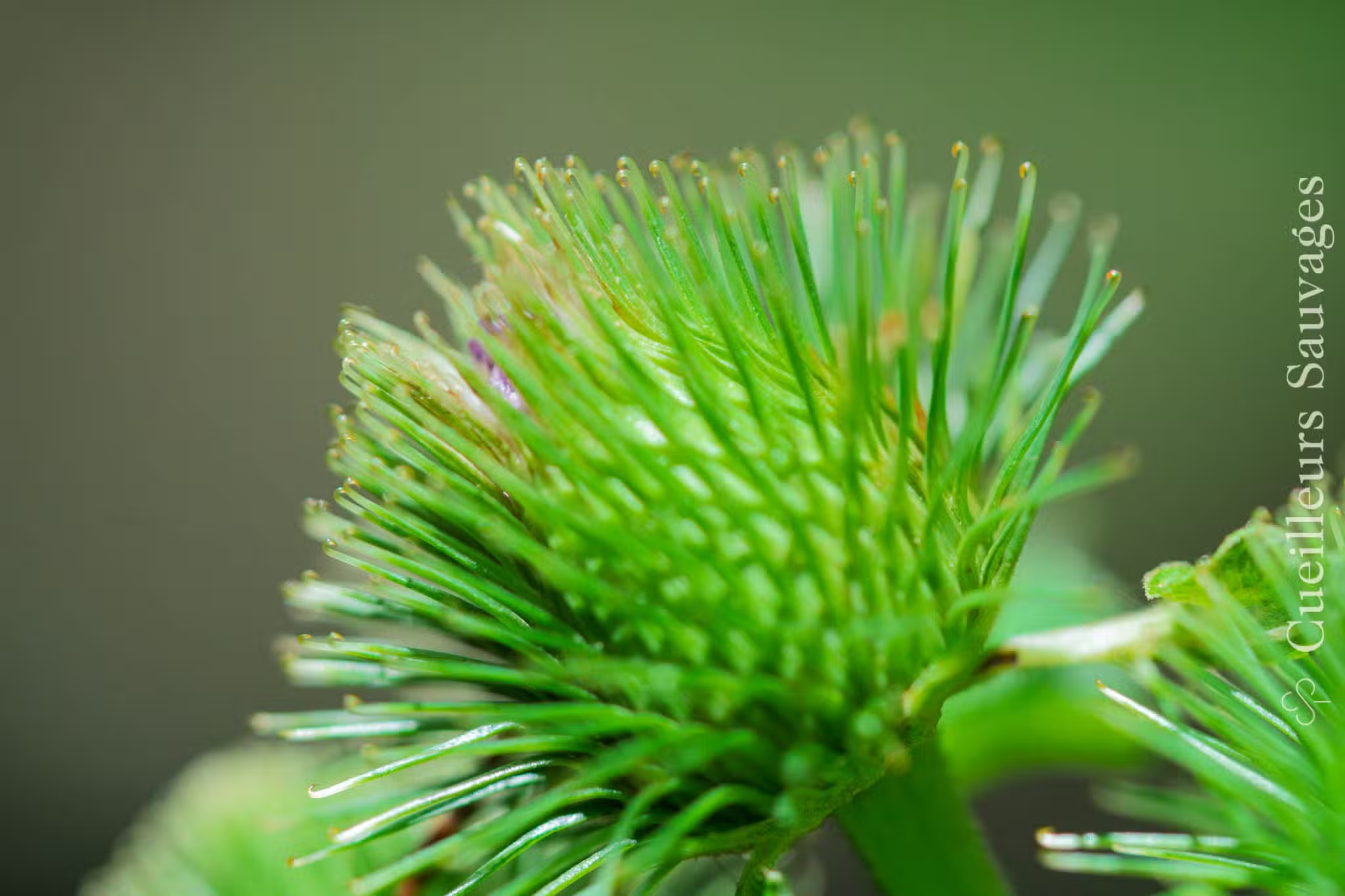
Flowering occurs from July to September. The tubular flowers, pink to purple, are clustered in globular heads measuring 3 to 4.5 cm. A head is a group of small flowers tightly packed together, as in dandelions or artichokes.
Surrounding the flowers are numerous green bracts ending in a hook. When mature, these hooks allow the fruiting heads to travel clinging to the fur of animals.
In Arctium lappa, the flower heads are usually clustered in a sort of loose corymb. Their peduncles often measure between 3 and 10 cm and exceed the length of the flower head. [1]

The root
The burdock has a long taproot that grows deep into the soil. It is most tender during the first year of growth and in early spring of the following year, before the stem emerges. After the stem appears, the root becomes fibrous and is no longer edible.
Always identify the plant by its aerial parts before digging up the root. An isolated root is much more difficult to identify with certainty.
Digging up a root has a greater impact on the environment than cutting a leaf. Do it judiciously and only occasionally.
In the garden
This is a plant we particularly enjoy growing in the garden because it's not abundant in the surrounding countryside near our home. We plant it every year or two. It's impressive to see how deep the roots are, even after just one growing season in the loose soil of a vegetable garden bed.
Be careful, because it takes up space and in some climates it can be particularly “invasive” and reseeds itself very easily.


Possible look-alikes
Lesser burdock
Le genre Arctium contient 4 espèces dans la flore suisse et 5 dans la flore française. À celles-ci s’ajoutent les sous-espèces et cultivars.
The lesser burdock ( Arctium minus ) is the plant that most closely resembles the greater burdock and also flowers from July to September.
Its flower heads are smaller and arranged in racemes rather than corymbs, thus more continuously along the stem. Their flower stalks are very short. The most practical criterion, however, is found in the basal leaves: their leaf stalk is hollow, whereas it is filled with pith in Arctium lappa [10].
Burdock species can also hybridize. Some individuals therefore exhibit intermediate characteristics.
The white butterbur
Among plants with large leaves, those of the burdock can be confused with those of the white butterbur ( Petasites albus ). Here are the main criteria to observe:
| Greater burdock | White Butterbur |
|---|---|
| Veins forming a network | Main veins radiating from the petiole |
| Oval leaves with a heart-shaped base | Leaves broadly kidney-shaped, shaped like a kidney |
| Rosette then large branching stem | Flowers appear before the leaves |
| Ruderal environments and roadsides | Forests and cool, damp places |
| Purple flower heads in summer | Whitish flowers from March to May |


Don't rely solely on size or the whitish underside of the leaves, as both plants can exhibit these characteristics. Several criteria must be compared, and the environment taken into account.
White butterbur ( Petasites albus ) contains pyrrolizidine alkaloids, including senkirkine, some of which are hepatotoxic, genotoxic, and potentially carcinogenic [14]. Direct consumption of the plant is therefore not recommended. Butterbur has been used in herbal medicine, but modern preparations intended for internal use must be free of these toxic alkaloids.
Culinary uses
Harvesting the root
The root is mainly harvested from September to March, from a plant in its first year or the beginning of its second. It must be harvested before the flower stalk develops.
Harvesting requires a sturdy tool and sufficiently loose soil. The root can grow deep and is very fleshy! Since harvesting it kills the plant, only harvest it from an abundant population, with the landowner's permission, and allow enough plants to complete their life cycle.
After harvesting, thoroughly scrub the root under running water. The thin skin can be left on. Then cut the root into slices, chunks, or thin sticks, depending on how you intend to use it.


Cooking the root
Burdock root is one of our favorite wild roots. For us, it's by far the most interesting part of the plant, with a lot of roundness and sweetness.
Boiled or steamed, the root becomes tender and can be served as a side dish or mashed. It also adds a pleasant flavor to soups and broths.
During the autumn and winter months, we particularly enjoy cooking wild plants in a nourishing broth, especially in the form of Japanese ramen. Dandelion, meadowsweet, lapsana, and burdock Roots are our all-time favorites.

You can also julienne it and sauté it. Its texture remains slightly firm and its flavor is reminiscent of artichoke, with a more earthy note. Or fry it as chips.

Once dried and roasted, the root can be used to prepare a dark, coffee-like beverage, but naturally caffeine-free.
Petioles, stems and leaves
The young petioles can be peeled to remove their toughest fibers. They are eaten raw when still very tender, or steamed and prepared as a vegetable. The young stems can be used in the same way before they become fibrous. The consumption of young leaves and stems, raw or cooked, is documented in some traditional European uses [6].
The first-year leaves are also edible, but their bitterness limits their appeal. Several successive cookings, with changing the water, can reduce the bitterness. However, we found this tedious during our trials. Although bitterness is good for digestion, the result was rather unpleasant.
However, you'll find plenty of content online stating that the leaves are excellent. It really comes down to personal preference.
The young flower heads are sometimes prepared as fritters or used in infusion. They must be harvested before the hooked bracts become hard and unpleasant.
Medicinal uses
Burdock root has a long history of medicinal use in Europe and Asia. It has traditionally been used to promote urinary elimination, temporarily stimulate appetite, and support certain seborrheic skin conditions [7].
In 2019, Wang and colleagues synthesized the pharmacological knowledge of greater burdock in the scientific literature. More than 200 non-volatile compounds were described: terpenes, flavonoids, caffeoylquinic acid derivatives… [6]
Laboratory and animal research has studied the antioxidant, anti-inflammatory or hypoglycemic properties of burdock extracts.
This research is interesting, but caution is necessary because the therapeutic efficacy observed in these studies has not yet been demonstrated in humans. Nevertheless, it highlights the significant pharmacological potential of this traditionally used plant.
Cosmetic uses
Inulin, present in burdock root, is also of interest to cosmetics. This fructan has moisturizing properties and improves the texture and stability of creams, lotions and hair care products [15].

Its prebiotic potential could also promote certain beneficial bacteria in the skin microbiota, the collection of microorganisms living on our skin. Biodegradable and derived from renewable resources, it represents a promising ingredient [15].
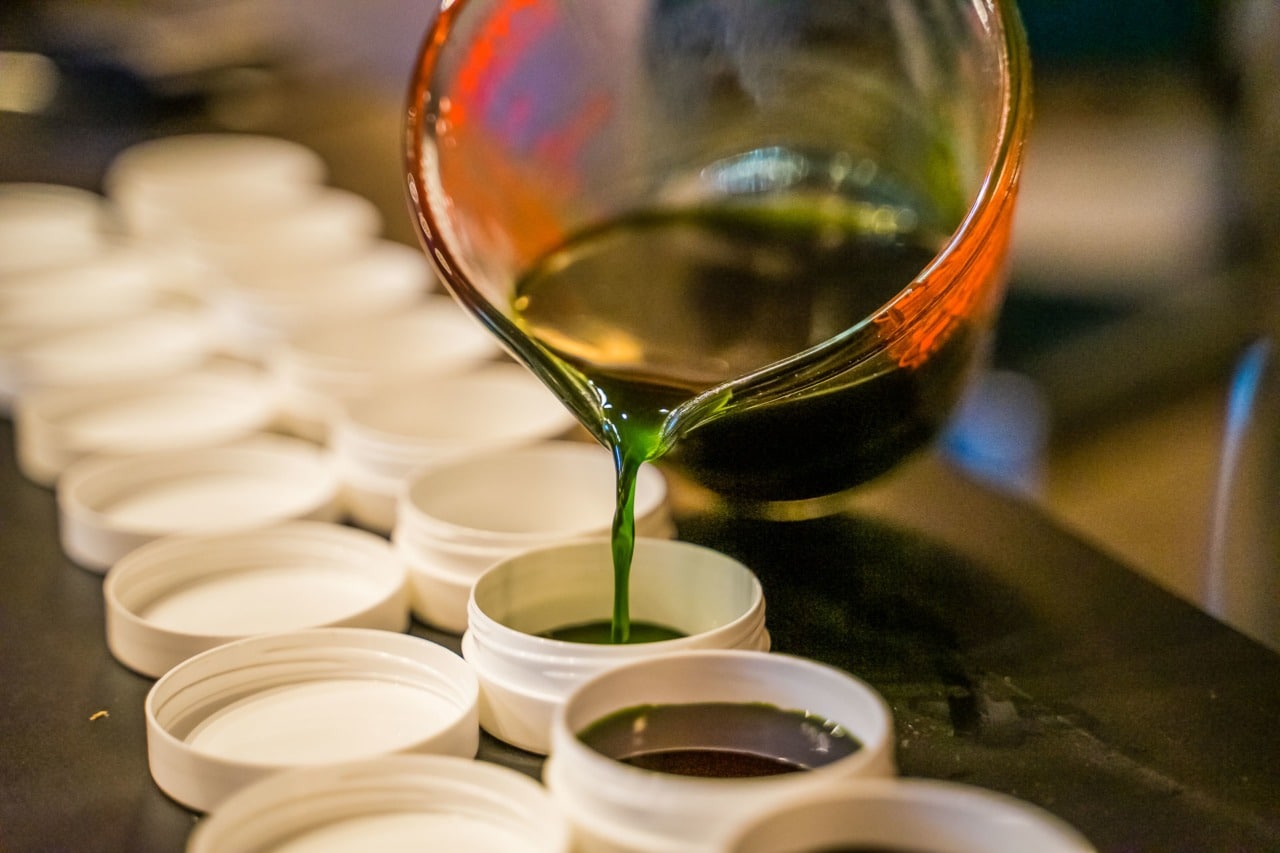
Marie is particularly fond of it in her cosmetic care. She grows it in her garden and uses the roots, flowers and leaves to make infused oils.


She uses her macerated oils as a hydrating serum in facial treatments. These are included in her creams to nourish, hydrate, and provide a tightening effect.
She also has a very interesting anecdote to share. During a private lesson with a client suffering from multiple chemical sensitivity (MCS), we found that she tolerated burdock -based preparations very well.
This person is intolerant to both environmental chemicals and certain plants commonly used in cosmetics, such as pot marigold. Consequently, she had considerable difficulty finding products that fully addressed this issue and met her specific needs.
Together, we created serums, creams, and moisturizing lotions containing burdock, which she tolerated very well. This isn't a universal truth, but rather an example illustrating the benefits of this plant in natural cosmetics, even for very sensitive skin.

Precautions for use
Consumed as a vegetable, burdock root is generally well tolerated. However, some precautions are still necessary.
Its high inulin content can cause bloating, gas, or abdominal discomfort, especially if you eat a large amount without being used to it. This effect depends on the dose and individual sensitivity, so start with a small portion. [8]
Allergic reactions to burdock have been reported, including rare cases of severe immediate reactions. People already sensitive to Asteraceae should exercise particular caution. [9]
For medicinal preparations, the European Medicines Agency advises against use during pregnancy and breastfeeding due to insufficient data. This precaution applies to self-medication with medicinal preparations and extracts, which should not be confused with occasional food consumption. [7]
References
- InfoFlora, Arctium lappa L. — Common burdock, data from Flora Helvetica, accessed in September 2026.
- Royal Botanic Gardens, Kew, Arctium lappa L., Plants of the World Online, accessed in September 2026.
- Velcro Companies, Our Story — Unexpected Inspiration, accessed in September 2026.
- Ministry of Agriculture, Forestry and Fisheries of Japan, Kimpira — Stir-fried root vegetables, accessed in September 2026.
- Moro TMA and Clerici MTPS, Burdock (Arctium lappa L.) roots as a source of inulin-type fructans and other bioactive compounds, Food Research International, 2021, 141, 109889. DOI: 10.1016/j.foodres.2020.109889.
- Wang D. et al., Arctium species secondary metabolites chemodiversity and bioactivities, Frontiers in Plant Science, 2019, 10, 834. DOI: 10.3389/fpls.2019.00834.
- European Medicines Agency, Community herbal monograph on Arctium lappa L., radix, EMA/HMPC/246763/2009, 2011.
- Bruhwyler J. et al., Digestive tolerance of inulin-type fructans, International Journal of Food Sciences and Nutrition, 2009, 60(2), 165–175. DOI: 10.1080/09637480701625697.
- Ishikawa H. et al., Allergen Analysis of Burdock Allergy, Japanese Journal of Dermatology, 2010, 120(11), 2219–2222. DOI: 10.14924/dermatol.120.2219.
- InfoFlora, Arctium minus Bernh. — Small-capped burdock, accessed in September 2026.
- European Medicines Agency, Assessment report on Arctium lappa L., radix, EMA/HMPC/246764/2009, 2011.
- InfoFlora, Petasites albus (L.) Gaertn. — White butterbur, accessed in September 2026.
- IUCN France, FCBN, AFB & MNHN, 2018. The Red List of Threatened Species in France – Chapter on Vascular Flora of Metropolitan France. Paris, France.
- Aydın AA, Zerbes V., Parlar H., Letzel T., 2013. The medical plant butterbur (Petasites): analytical and physiological (re)view. Journal of Pharmaceutical and Biomedical Analysis, 75: 220–229. DOI: 10.1016/j.jpba.2012.11.028.
- Najwa Mohamad, Kai Bin Liew, Siew Hua Gan, Chapter 14 – Inulin as a natural ingredient in cosmetics and personal care products, Comprehensive Guide to Inulin Applications in Health, Nutrition and Consumer Products, 2026, 377-396

Edible wild plants
Sep. 18, 2026
Greater burdock (Arctium lappa): identification, harvesting and uses
August 27, 2026
Black elderberry: how to recognize it, distinguish it, and cook it
February 27, 2026
Spring's green gold: how to harvest wild garlic without depleting the forest?
August 7, 2025
Sweet clover (Melilotus albus): identification, harvesting and cooking
March 13, 2025
Meadow sorrel: identification, uses and precautions
Latest articles
Sep. 18, 2026
Greater burdock (Arctium lappa): identification, harvesting and uses
August 27, 2026
Black elderberry: how to recognize it, distinguish it, and cook it
June 12, 2026
Plant Poetry Exhibition 2026
May 7, 2026
Toxicity of wild chervil leaves, Anthriscus sylvestris
March 19, 2026
Botanical Impression in a Rust Pot
September 20
The Pleiades
- Marie Mellioret

Creating autumn wreaths and waxed leaves
Lally Station, Parking, Blonay, Switzerland.
September 25
- Michael Berthoud
September 26
The Pleiades
- Marie Mellioret
Natural cosmetics workshop: facial care
Lally Station, Parking, Blonay, Switzerland.
September 26
- Michael Berthoud
No events found.