



Log in
Botulism: Make Wild Plant Pestos Safely
Michael Berthoud
/
3 November 2026
Last updated: 3 Nov 2026 with new references and official recommendations.
L’wild garlic is one of the most popular wild plants for making pestos. It’s an excellent way to enjoy its flavours, as well as those of ground elder, stinging nettle and other edible wild plants. However, certain precautions should be taken, as preparations made with fresh plants preserved in oil may pose a risk of botulism.
If you like making preserves of plants in oil, you should know that there is a risk, although rare, of producing an extremely dangerous toxin: botulinum toxin.
For many years, I made pestos without worrying about it because, like many people, I was unaware of the problem. I don’t even mention it in the first edition of my book on edible wild plants, as I knew little about the subject when I was writing it. Today, it seems important to me to share this information, especially as many of us prepare jars to keep for several months or give to our loved ones.
Fortunately, there are simple ways to reduce this risk, including freezing.
Botulism and botulinum toxin
Botulism is an illness caused by a toxin called botulinum toxin. It is one of the most toxic substances known: according to the Swiss Federal Office of Public Health (FOPH), less than a millionth of a gram of type A toxin can be enough to kill a person weighing 70 kg [1].
This toxin is produced, among other things, by a bacterium called Clostridium botulinum. It occurs naturally in the environment, particularly in soil and aquatic sediments. It can survive there for a long time in the form of spores, resistant structures capable of withstanding unfavourable conditions [1][2].
When conditions become favourable, the spores can germinate and give rise to active bacteria, which multiply and produce botulinum toxin. So dormant spores do not produce the toxin directly. Wild plants growing in contact with the soil may carry spores. If these plants are placed in an oxygen-poor environment, such as a preparation containing oil, the bacterium can grow and produce the toxin when the other conditions are also favourable [2][6].
Fortunately, botulism remains rare. In Switzerland, the FOPH generally records one or two cases a year. In mainland France, 122 cases of human botulism, of all forms, were reported between 2018 and 2024 [1][3].
After toxin is ingested in food, symptoms usually appear within 12 to 36 hours, sometimes sooner or later. They may include:
- dry mouth;
- blurred or double vision and impaired eye movements;
- hoarseness or difficulty speaking;
- difficulty swallowing;
- muscle weakness that may progress to paralysis of the respiratory muscles.
Botulism is a medical emergency. If these symptoms appear after eating a preserve or pesto, seek emergency medical care immediately [1][2].

A case of botulism linked to wild garlic pesto in France
In September 2024, five people were hospitalised in Indre-et-Loire after eating homemade wild garlic pesto preserved in jars. The National Reference Centre at the Institut Pasteur confirmed the presence of Clostridium botulinum in the pesto in question. Investigations also revealed that the sterilisation process used for the preserves was not under control [4].
This case is a reminder that the risk, although rare, directly concerns preparations made from wild plants.
Conditions favourable to bacterial growth
The bacterium responsible for botulism grows under certain conditions that are useful to know about:
- Absence of oxygen: Clostridium botulinum grows in an anaerobic environment, meaning without oxygen. Oil can create such an environment around plant material.
- Presence of water: the bacterium needs available water to grow. Fresh plants contain a lot of it. Thorough drying reduces this risk, but using dried plants alone does not guarantee that they can be safely stored in oil.
- Temperature: some strains can grow slowly at temperatures as low as 3 °C. Refrigeration therefore limits the risk, but does not allow for indefinite storage. At −18 °C, however, bacterial multiplication and the production of new toxin are prevented.
- Acidity: a pH below 4.6 normally prevents the growth of C. botulinum. But for an acidified preparation to be safe, the required acidity must be reached in time and throughout all the plant material, not just in the liquid surrounding it.
These conditions explain why pesto made from fresh plants, which are rich in water, and containing oil should not be considered a shelf-stable preserve at room temperature [2][6].
What can you do to prevent botulism?
A few simple precautions can reduce the risk:
- Use correctly identified, clean and healthy plants: wash them and work with clean utensils and containers. Washing reduces dirt, but does not guarantee that spores will be removed.
- Eat promptly: if you make pesto for a meal, eat it without leaving it at room temperature for a long time.
- Refrigerate immediately: if you are not eating it straight away, store it at 4 °C or below.
- Freeze for longer storage: this is the simplest way to keep homemade pesto for more than a few days.
In its publication Herbs and Vegetables in Oil, revised in January 2025, the Oregon State University Extension Service explicitly recommends keeping homemade pestos in the refrigerator for no more than 4 days, or freezing them for longer storage [5].
This recommendation applies to homemade pestos containing plant material and oil. As a precaution, it can be applied to wild-plant pestos made in a similar way; it is not experimental validation of every wild-plant pesto recipe.
Can you tell if pesto is dangerous by its smell?
According to the Swiss Federal Office of Public Health, you should avoid eating preserves with bulging lids or jars that are not properly sealed [1].
Other signs should also raise the alarm: an unusual release of gas or liquid when opened, mould, an unusual change in appearance or a suspicious smell.
Warning: botulinum toxin has no smell or taste that would allow it to be detected. A pesto may therefore seem perfectly normal and still contain the toxin. If you have any doubts about how it was prepared or stored, do not taste it; throw it away [7].
Does cooking make pesto safe?
Botulinum toxin is heat-sensitive. According to the World Health Organization, it can be inactivated when the temperature at the centre of the food exceeds 85 °C for at least 5 minutes [2].
However, the toxin must be distinguished from the bacterial spores. Cooking that inactivates the toxin does not necessarily destroy the spores, which are much more resistant. Destroying spores in low-acid preserves requires a specific heat treatment validated for the product and its packaging.
You should therefore not rely on cooking to «rescue» pesto that has been stored incorrectly or looks suspect. If in doubt, throw it away rather than trying to make it safe to eat by heating it [2][7].
Sterilising jars in the oven is not a reliable method either: the temperature displayed by the oven does not guarantee that the entire preparation has received sufficient heat treatment. This method is not recommended by the National Center for Home Food Preservation [8].
Oregon State University also points out that there is no validated home-preserving process for making pesto shelf-stable at room temperature [5].
For homemade pesto, it is therefore best to opt for short-term refrigeration or freezing rather than trying to sterilise it.
Freezing: the simplest way to preserve pesto
Several of you have asked whether pesto can be frozen. The answer is yes, and this is the method recommended for long-term storage by the Oregon State University Extension Service [5].
At −18 °C, bacteria no longer multiply or produce new toxin. However, freezing does not necessarily destroy spores or any toxin already present before freezing. Pesto should therefore be frozen freshly prepared and handled correctly, not after being left at room temperature for too long [2][9].
This method preserves the flavour of pesto without needing to cook it.
How to freeze pesto
- Make the pesto with fresh plants that have been correctly identified, cleaned and prepared.
- Quickly divide it into small portions in freezer-safe containers or ice-cube trays.
- Place it in the freezer at −18 °C without leaving it at room temperature unnecessarily.
- Once the portions are frozen, you can put them together in an airtight container or bag. Label it with the date it was made.
- Defrost in the fridge, then use promptly. Oregon State University recommends using defrosted stinging nettle pesto within 4 days at most [10].
Pesto can be kept this way for several months. Provided the temperature remains constantly at −18 °C, the length of time it is frozen mainly affects its flavour quality. Oregon State University even provides a recipe for stinging nettle pesto frozen in small portions, with a suggested storage time of up to one year [10].
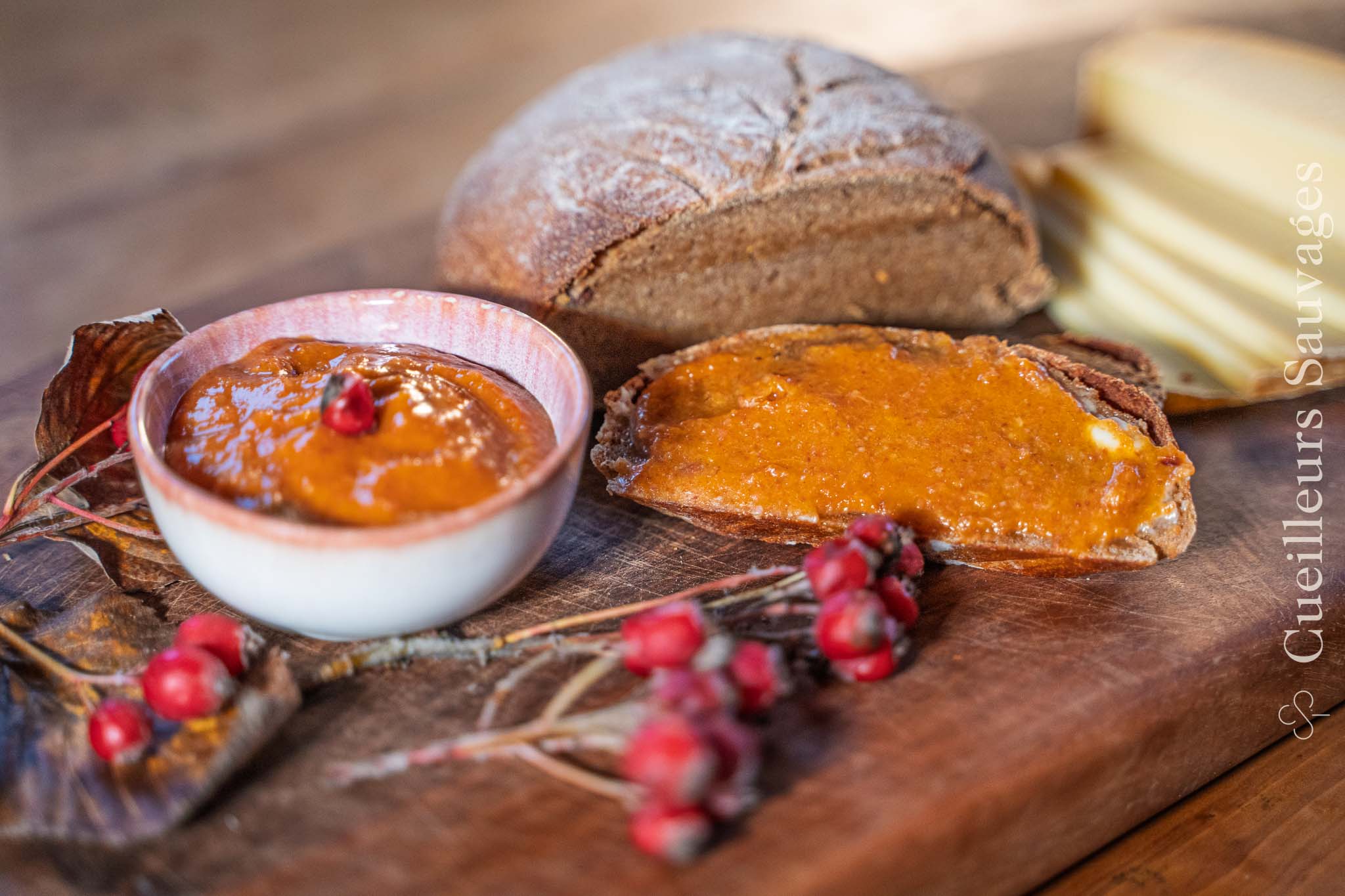
This is the method I prefer for making large quantities of wild plant pesto and then enjoying it without cooking, for example on bread.
Lacto-fermentation: another option
Another preservation method is called lacto-fermentation. It relies on the growth of lactic acid bacteria, which gradually acidify the preparation.
When acidification is sufficient and properly controlled, it prevents Clostridium botulinum from growing. The microbiological reference threshold is a pH below 4.6. To provide an additional safety margin, Virginia Tech recommends aiming for a pH of 4.1 or lower for fermented vegetables [2][12].
How can you check the acidity?
You can check the pH with suitable test strips that can distinguish at least one tenth of a pH unit. However, plant pigments can make the results difficult to read, and many strips are too imprecise. A properly calibrated pH meter is preferable when you want to check the acidity of a ferment precisely [11][12].
The measurement must be representative of all the plant material, not just the brine. Acidification must also occur sufficiently early: a satisfactory pH at the end of fermentation would not eliminate any toxin that might have been produced earlier. It is therefore important to follow a tried-and-tested fermentation method, using appropriate quantities of salt, temperature and duration [2][6][11].

Can lacto-fermented plants then be put in oil?
This preparation is an option, but a pH measurement below 4.6 is not, on its own, enough to validate long-term storage in oil at room temperature. In particular, you would need to ensure that all the plant material has reached the desired acidity and that the entire process is properly controlled. Health Canada emphasises the importance of equilibrium pH in plant material preserved in oil and of validating the production conditions [6].
For a homemade preparation, I therefore recommend keeping lacto-fermented plants to which oil has been added in the fridge, without assigning them an unvalidated long storage life. Lacto-fermentation is an interesting option, but it requires more expertise than freezing fresh pesto.
In summary: how should you store wild plant pesto?
- Eat immediately: make the pesto with fresh ingredients and use it promptly.
- In the fridge: store it at 4 °C or below and use it within 4 days at most [5].
- For several months: quickly freeze freshly made pesto at −18 °C [5].
- After defrosting: keep it in the fridge and use it within 4 days at most, preferably sooner [10].
- In a jar at room temperature: do not use an unvalidated home process to make pesto shelf-stable outside the fridge [5][8].
These precautions allow you to enjoy the flavours of wild plants while limiting microbiological risks. They are particularly important when making pesto in large quantities or to give to friends and family.
References
[1] Swiss Federal Office of Public Health (FOPH). Botulisme. Swiss Confederation.
[2] World Health Organization (WHO). Botulisme. 25 September 2023.
[3] Santé publique France. Botulisme en France. Bilan 2018-2024. 30 July 2025.
[4] French Ministry of Agriculture. Point de situation: confirmation des cas de botulisme en Indre-et-Loire. 12 September 2024.
[5] Raab, C. & Woodburn, M. Herbs and Vegetables in Oil. Oregon State University Extension Service, SP 50-701, revised January 2025.
[6] Health Canada. Guidance on Mitigating the Health Risk Associated with Clostridium botulinum in Plant and Mushroom Products Stored in Oil.
[7] Centers for Disease Control and Prevention (CDC). Home-Canned Foods. 25 April 2024.
[8] National Center for Home Food Preservation. Equipment and Methods Not Recommended. University of Georgia.
[9] United States Department of Agriculture (USDA), Food Safety and Inspection Service. Does Freezing Food Kill Bacteria? Updated 14 August 2024.
[10] Macy, D., Hyde, G., Brixey, J. & Davis, O. Wild Edibles: Stinging Nettle. Oregon State University Extension Service, EM 9373, November 2022.
[11] Utah State University Extension. Tips to Safely Ferment at Home.
[12] Eifert, J. et al. What Do I Need to Know to Sell Fermented Vegetables at the Farmers Market? Virginia Tech, publication FST-308NP, reviewed in November 2025.
Cover image by Elena Mozhvilo.


35 comments
✍️ Leave a comment


November 28
The Pleiades
- Marie Mellioret

Making a Christmas star
Lally Station, Parking, Blonay, Switzerland.
November 29
The Pleiades
- Marie Mellioret
Making a Christmas star Sold Out
Lally Station, Parking, Blonay, Switzerland.
4 April
La Sarraz
- Michael Berthoud

Edible and medicinal wild plants of spring in La Sarraz
Parking at the Sarraz football fields. Cossonay road.
No events found.
As always, your articles are really interesting and very informative!
Thank you very much,
Virginie
Author
Thanks, Virginie! ^^
What about pesto that is frozen immediately?
THANKS!
Philippe
Author
Hello Philippe,
I don’t have a precise answer. The bacterium survives freezing. It seems that freezing slows toxin production, but the temperature would need to be lower than what we have at home. However, I don’t have a reliable source…
Best wishes
Michaël
Hello,
Could washing the leaves thoroughly with water be a solution?
THANKS!
Delphine
Author
Hello Delphine,
As with echinococcosis, washing with water is not enough. In the case of botulinum toxin, only heat or acidity will do.
Best wishes
Michaël
Hello,
I make my wild garlic pesto by lacto-fermentation: I chop the leaves with a knife and leave them in brine for a week, then drain them (keeping the liquid for salad dressings) and blend them with nuts and seeds and oil.
Author
Hello Valérie,
Thank you for sharing! This looks like a good way to do it, and apparently the safest!!
Best wishes
Michaël
Hello,
I’ve been freezing my pesto in ice-cube trays for years, then storing the cubes in bags. Once defrosted, the pesto is just as good as fresh. Wild garlic loses its flavour when heated, so the freezer is the way to go for that!
Author
Hello,
Thank you for sharing. Freezing probably slows toxin production, although I haven’t been able to verify this. It’s certainly better than storing it in oil without doing anything else.
Best wishes
Michaël
Hello
For 16 years, I’ve been making 8 to 12 jars of wild garlic each year;
- rinse the leaves in two changes of water; the last one in 10% vinegar water
- dry the leaves and leave them to wilt slightly on tea towels for 2 to 3 days (this reduces their moisture content)
- chop with a knife and put into jars: 1 pinch of coarse salt, then a 1 cm layer of chopped leaves, and so on, up to 1 cm below the rim of the jar;
– pour in olive oil to the top and wait for the air bubbles to escape (you can shake carefully to speed things up); top up with oil if necessary
- seal the jar airtight and refrigerate for 1 month before eating
There you go...
Author
Hello Joon,
Most people take even fewer precautions, and most of them will be fine. The risk is very low, but it does exist. However, I’m not sure that 10% vinegar water is enough to get the pH below 4.5. It would need to be checked.
Best wishes
Michaël
Good evening, Michaël,
I always enjoy reading the newsletters. Thank you for this wonderful work.,
I soak the leaves in water with vinegar for 12 hours, then rinse them and put them in the freezer. I use them as needed.
Well, I hope to see you again.
Joke.
Author
Hello Joke,
Thank you for your message! ^^
As for your preparation, I suggest testing the pH of your vinegar water to make sure it is below pH 4.5. You can use paper test strips for this. That way, you can be sure of the effect.
Best wishes
Michaël
Brilliant article about botulism
THANKS
Author
Thank you ^^
Thank you for this excellent article. It’s something I’d wondered about, but I hadn’t found an article that explained it so clearly.
Author
Thank you for your feedback, Valentine! ^^
Hello,
Thank you for your article! I was wondering whether the botulinum toxin is destroyed by adding enough vinegar or lemon juice to raise the pH to 4.6?
Thank you for your reply m
Author
Hello María,
Yes, if you add an acidic substance, it will kill them. But the questions that remain are: how much needs to be added to reach pH 4.6 (that depends on many factors), and for how long.
So I don’t think we can be 100% certain that it works, unless we do some research to find a validated protocol.
Best wishes
Michaël
Thank you for your reply! After looking into it, the amount of salt is important, as is adding lemon juice or vinegar. I think I’ll invest in a pH meter and do a few experiments of my own.
Author
Good initiative!
Please do share your discoveries with us so everyone can benefit 😉
Michaël
Hello,
I was wondering whether a certain amount of salt could prevent botulism from developing?
THANKS
Theo
Author
Hello Théo,
That’s a very good question. Unfortunately, I haven’t been able to find any information about this... if you do find anything, please share it here.
Best wishes
Michaël
It’s true that adding 10% salt prevents botulinum toxin from developing... That’s far too salty for pesto, though. I’m going to invest in a pH meter to run some tests, and also have stability tests done by laboratories (€20 to €30), or through the CFPPA de Florac (€12). Thanks for such a well-researched article, anyway!
Just a small addition: stability tests aren’t necessarily intended to test for the presence of botulinum toxin! You need to ask for a sample to be plated on agar to check for the growth of botulinum spores. Be sure to specify this!
Author
Hello Juliette,
Thanks for sharing your investigations. Please do come back with the results.
When you say, «It’s true that adding 10% salt prevents botulinum toxin from developing...», do you have a reference I could use to update the post with this very interesting information?
10% salt is too much for pesto, but I have some good recipes for fresh plant broths with 20% salt.
Hello,
After a few months of investigations and discussions with laboratories... (it’s been rather difficult to get clear, consistent answers), it seems that the only thing that prevents botulinum toxin from developing is a pH below 4.5 (or 4.3, since we allow for a 0.2 margin of error with the pH meter). But it’s not that simple: the pesto needs to be smooth enough for the measurement to be accurate; it needs to be pasteurised to stabilise the product and prevent other preservation problems; the container must be completely airtight; and the pH needs to be checked again on day 7 to ensure the product is stable. There is a serious health risk if you pasteurise a product with a pH above 4.5. In short, it’s quite a complex subject and you need to invest in the right equipment. People have been preserving food for ages, of course... In any case, if anyone is interested, they should consider training in food hygiene to understand the preservation process properly.
Thanks for sharing your knowledge and articles, Mickaël!
Author
Hello Marie,
Thank you so much for all this research! Yes, it gets complicated if you have to set up a laboratory at home ^^
I haven’t looked into pasteurisation in much detail. I’ve just discovered that it is often done at temperatures between 60 and 100°C, which is indeed not hot enough.
Lacto-fermentation therefore seems like a good alternative if you want to preserve your preparations. Or heat them to 130°C...
Best wishes
Michaël
Thanks for all this advice.
For more technical details, read the ANSES document.
Author
Hello,
Thank you for your comment. For anyone interested, I’ve added the Anses document to the article’s references.
Michaël
Hello,
Thanks for this article of general interest ^^
Would washing the plants with hydrogen peroxide be an idea? Perhaps not ideal, but it could be a starting point for discussion...
Author
Hello,
Thank you for your feedback. That’s a very good question, and I don’t know the answer. I don’t recall coming across any tests with hydrogen peroxide in all my research... more research would be needed ^^
Hello,
Thank you for this article and for your website in general. I read this article and the comments with interest, and wondered whether anyone could recommend a food pH meter suitable for semi-solid/solid foods, ideally with a probe? I’d be very grateful for any recommendations. Many thanks!
Author
Hello Jess,
I’m sorry, we don’t have a food pH meter, so we can’t make any recommendations. If you find a device that works for you, please let us know.
Good luck with your research!
Michaël