



Log in
10 Poisonous plants you need to know!
Michaël Berthoud
/
18 December 2018
You’ve started taking an interest in wild plants and have even gone looking for garlic mustard or campion. But now you’re having doubts. After all, these plants do look very similar. “Is this really the right one? What if I make a mistake? It could be serious, even fatal!” These doubts are natural and entirely welcome; listen to them, because they’ll save you a lot of trouble! They tell you that your knowledge isn’t yet secure or firmly rooted. Getting past this stage takes two steps: learning to recognise toxic plants and gaining confidence in yourself!
Table of contents
Winter is a time for rest. It’s the ideal season to get out your plant books and improve your theoretical knowledge. The practical side will return in spring. Use this time to read as much as you can about the toxic plants that grow in your area. The books recommended at the end of this article and online resources (Info Flora for Switzerland and Tela Botanica for France) will help. Whenever you read an article about a dangerous plant, visit one of these two sites and search for the plant by name. A map showing where it grows will appear, telling you whether it grows near you. Do this for all the major toxic plants, then go looking for them as soon as spring arrives. This approach will triple your confidence!
In this article, you’ll discover some dangerous plants and learn how to avoid confusing them with others. This list is, of course, not exhaustive.
Monkshood
Let’s start with one of the most toxic plants in our flora, and one of the most beautiful! Monkshood, Aconitum napellus, grows particularly in mountain meadows and pastures, often on nutrient-rich soils. It can reach about 1.5 m in height. Its leaves are deeply divided into 5 to 7 sections, but it is its intensely blue-violet, helmet-shaped flowers that really catch the eye.[6]
Monkshood belongs to the Ranunculaceae family. All parts of the plant are highly toxic, particularly the roots: they contain alkaloids such as aconitine, which can cause neurological problems and severe, potentially fatal heart rhythm disturbances.[16] Poisoning through skin absorption has also been reported, especially with concentrated preparations or roots applied to broken skin. Avoid handling the plant unnecessarily and wash your hands after touching it.[17]
In Switzerland, cases of masterwort (Peucedanum ostruthium) being confused with certain species of monkshood have been reported in the botanical literature.[31] In the Pyrenees, a forager died in 2018 after confusing young monkshood leaves with those of molopospermum (Molopospermum peloponnesiacum). The absence of flowers at harvest time increases the risk of a mistake.[30]


Fool's parsley
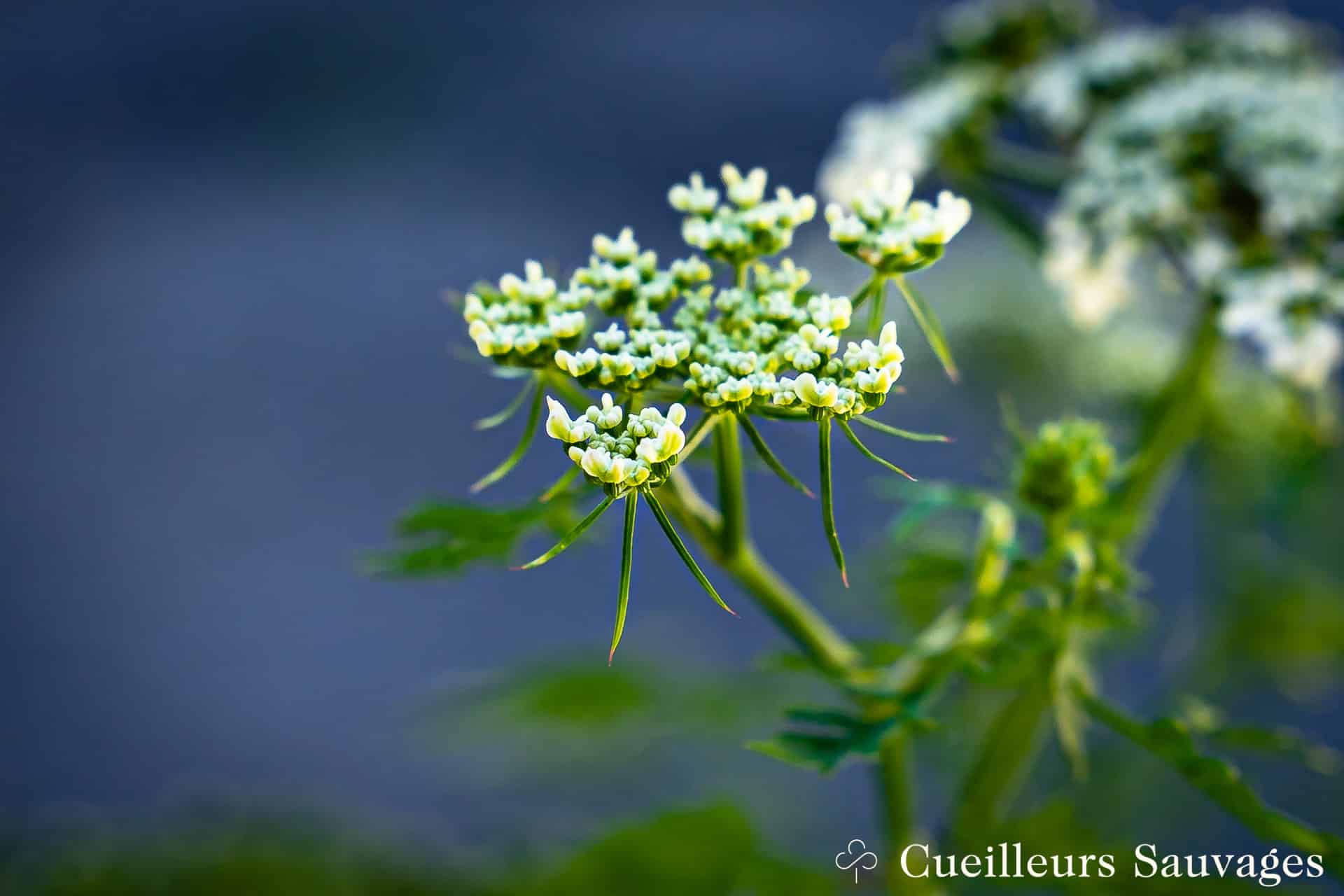
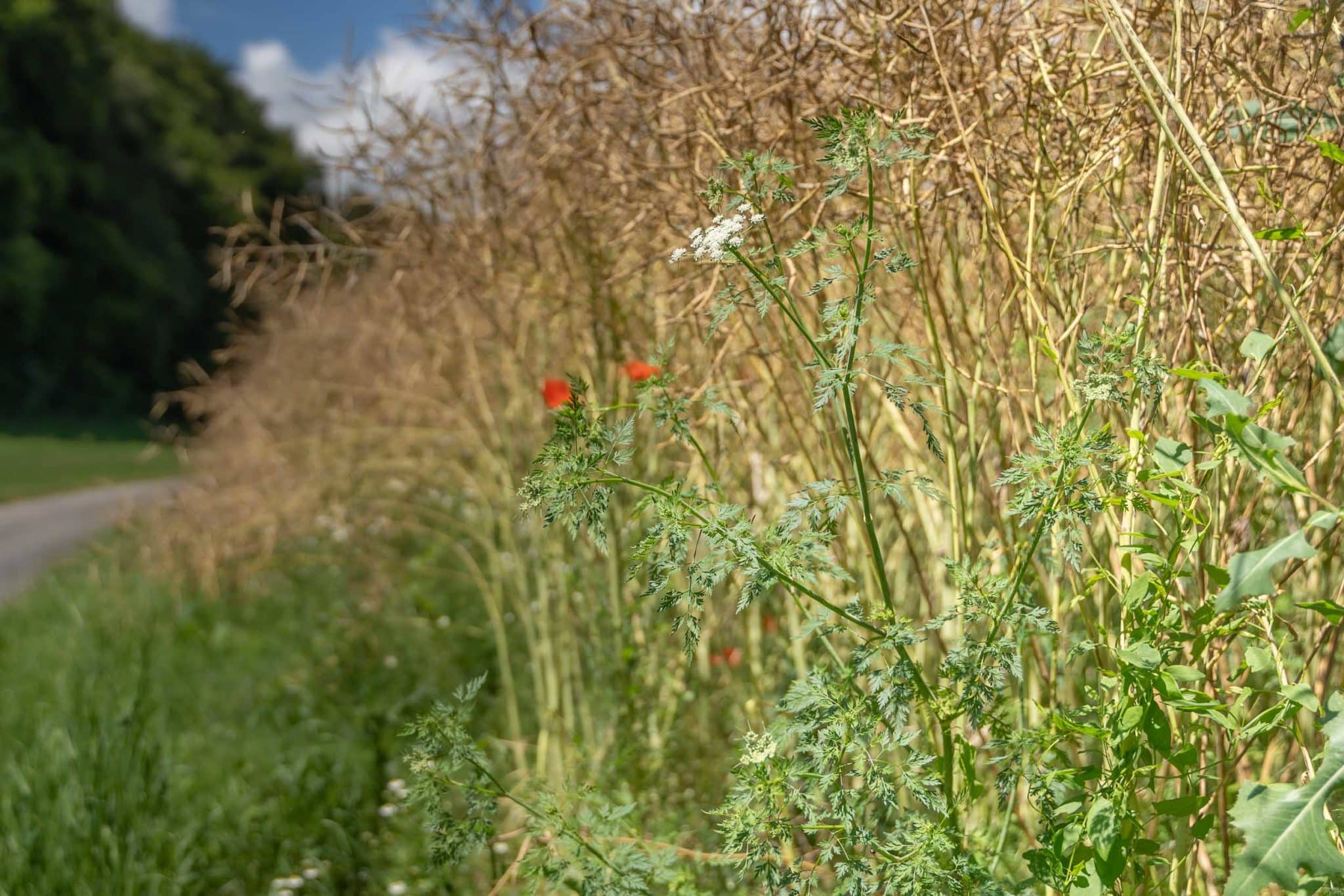
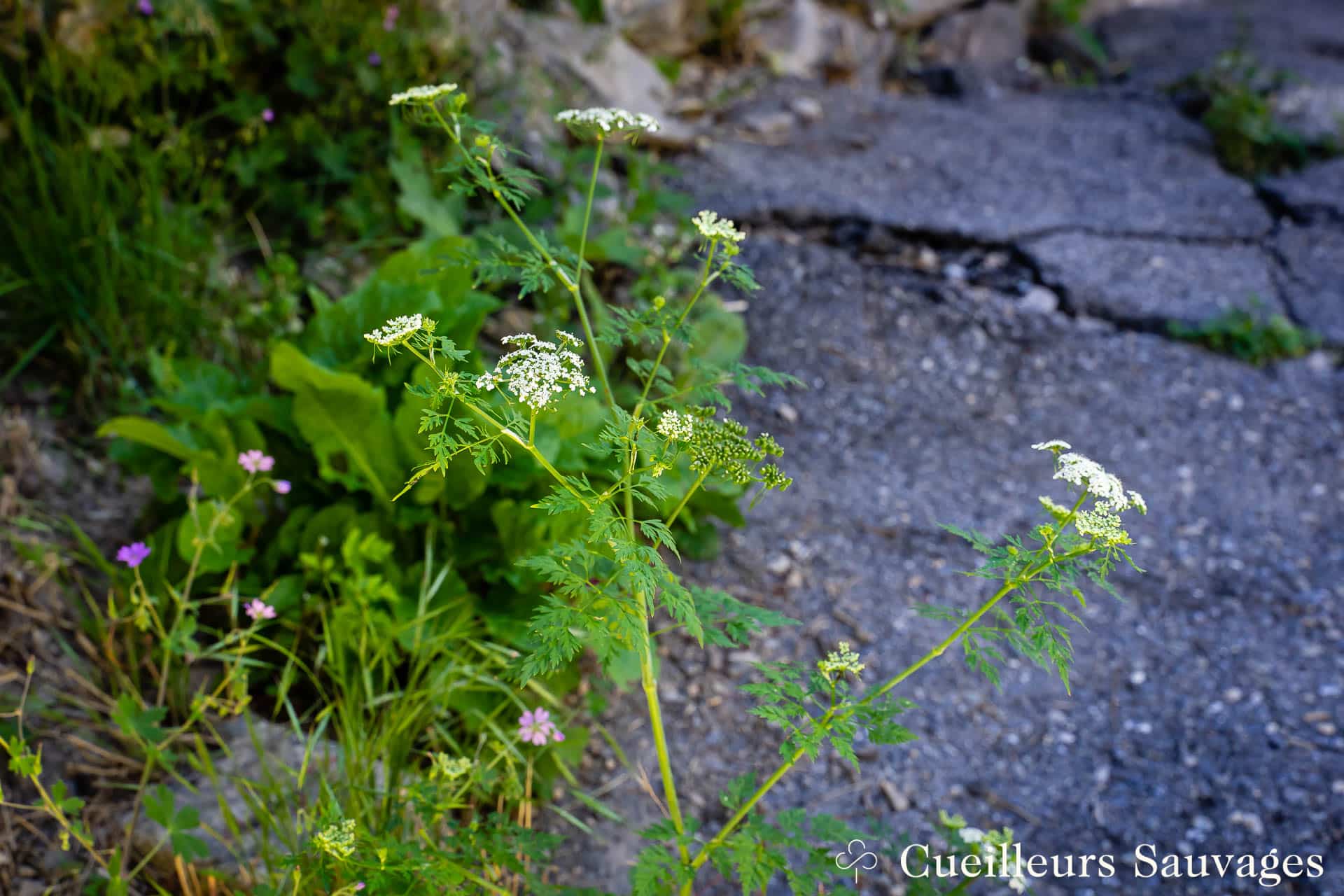
Fool’s parsley, Aethusa cynapium, is a member of the Apiaceae that resembles parsley. It grows in fields and gardens, near crops and on rubble.[7]
The toxicity of fool’s parsley has long been debated: some authors point out how difficult it is to distinguish poisoning by this plant from poisoning by poison hemlock, and describe mainly digestive symptoms.[5] However, a retrospective study published in 2025 describes a case attributed to fool’s parsley after it was eaten in a salad, involving nausea, vomiting and diarrhoea, accompanied by tremors, dizziness, muscle weakness and a faster heart rate.[18]
Fool’s parsley must therefore be regarded as a toxic plant and must not be eaten. It would be unwise to conclude that eating it can cause only mild symptoms.[18]
It can be confused with cultivated parsley and other members of the Apiaceae, particularly cow parsley. The risk is especially present in gardens and cultivated areas.
Look closely at its leaves, which are divided two or three times, dark green and glossy underneath. Beneath the small clusters of white flowers (the umbellets), you can usually make out three bracteoles pointing to the same side.[7] This feature is useful, but on its own it is never enough to confirm that a plant is edible.

Poison hemlock
Poison hemlock, Conium maculatum, is one of the plants that has left its mark on history. The death of Socrates in 399 BC is traditionally attributed to hemlock.
This member of the Apiaceae can reach 2 m in height. Its stem is hairless, often marked with purple spots, and its leaves are finely divided. When crushed, it may give off an unpleasant smell, but smell is not a sufficient criterion for safe foraging.[8]
All parts of the plant are toxic. It contains piperidine alkaloids, including coniine, which can cause neurological problems followed by paralysis of the respiratory muscles. Severe poisoning can be fatal.[19]


Yew
Caution! Yew, Taxus baccata, is a highly toxic conifer. Only the red flesh surrounding its seed, called the aril, contains no taxines. The needles and seeds, however, are dangerous, particularly if the seeds are chewed. To avoid accidents, do not eat arils with their seeds inside.[9, 20]
Taxines can cause serious heart rhythm disturbances, a drop in blood pressure and, in severe cases, cardiorespiratory arrest. Drying and cooking do not make the toxic parts safe. Yew is also particularly dangerous to horses and other farm animals.[20]
Yew can be confused with silver fir (Abies alba), especially when collecting shoots. It can grow to around 20 metres tall and has bark that is often reddish and peels off in strips. Its needles are generally pointed at the tip; silver fir needles usually have a notched or rounded tip and two clearly visible white bands on the underside. Finally, yew does not produce the upright cones characteristic of silver fir: its seeds are surrounded by red arils.[9]
Find out more: How can you easily tell yew from silver fir?
Herb Paris
Herb Paris, Paris quadrifolia, is a toxic plant of cool, damp woodland. It can generally be recognised by its four oval leaves arranged in a whorl at the top of the stem. It is often 20 to 30 cm tall. A solitary flower is followed by a bluish-black berry held upright in the centre of the leaves.[10]
The whole plant is toxic, particularly its berries. It contains steroidal saponins that can cause abdominal pain, nausea, vomiting and diarrhoea. Toxicological publications differ on the severity of poisoning and the number of berries that could cause it; it is therefore not justified to state a fixed number of berries that would be fatal to a child.[21, 33]
Its overall appearance is distinctive, but a berry on its own could be mistaken for a small wild fruit, particularly by a child. Always examine the whole plant and never taste a fruit you have not identified with certainty.[21]


White false hellebore
White false hellebore, Veratrum album, is a tall, toxic plant of mountain meadows and pastures that can resemble great yellow gentian (Gentiana lutea). It is toxic, notably because of the alkaloids in its underground parts. Serious poisonings have been documented in people who collected white false hellebore instead of gentian to make liqueurs. Symptoms can include vomiting, a drop in blood pressure and a sometimes marked slowing of the heart rate.[11, 22]
Fortunately, several features help distinguish them: white false hellebore has alternate leaves arranged in a spiral and flowers that are generally whitish or greenish, whereas great yellow gentian has opposite leaves and yellow flowers. Check these features on several parts of the plant, especially before flowering.[11, 22]


Giant hogweed
Giant hogweed, Heracleum mantegazzianum, is a tall member of the Apiaceae native to the Caucasus, introduced to Europe as an ornamental plant in the 19th century. This invasive non-native species can reach 3 to 5 m in height; it has large white umbels and very large, deeply divided leaves.[12, 23]
It is phototoxic. Its sap contains furanocoumarins which, when they come into contact with the skin and are then exposed to ultraviolet light, cause a reaction called phytophotodermatitis. This can result in severe redness, blisters and sometimes serious skin lesions, appearing several hours after exposure. The sap alone does not directly cause a burn: it is the combination of the plant substances and UV light that is dangerous.[23, 24]
Giant hogweed can be confused with common hogweed (Heracleum sphondylium). Its mature size, thick stem often blotched with red, and larger, deeply divided leaf segments ending in points help distinguish the two; identifying young plants requires greater caution.[23]
Do not gather giant hogweed for food. Although some ethnobotanical sources report culinary uses, these do not justify risking contact with its phototoxic sap. Avoid handling it with bare hands; if contact occurs, wash the skin promptly and protect it from light.[23]


Deadly nightshade
Deadly nightshade, Atropa bella-donna, is a herbaceous plant 50 cm to 1.5 m tall, found particularly in clearings, woodland edges and open woodland. Its purple-brown, bell-shaped flowers develop into shiny black berries, each surrounded at the base by a persistent calyx with five lobes spread out in a star shape.[13]
Its berries are highly toxic. Deadly nightshade contains tropane alkaloids, including atropine and hyoscyamine, which can cause anticholinergic syndrome: dilated pupils, dry mouth, a rapid heart rate, agitation, confusion and, in severe cases, coma. Eating just a few berries can be enough to cause poisoning requiring medical attention.[25, 26]
Cases of confusion with bilberries have been documented in published clinical reports. Never rely on the colour of the fruit alone: examine the leaves, the shape of the plant and, above all, the star-shaped calyx that remains beneath the berry.[13, 25]


Dwarf elder
Dwarf elder, Sambucus ebulus, is a toxic herbaceous perennial that grows 1 to 2 m tall, often forming colonies on banks, in hedgerows and in scrub. Its flowers, grouped in corymbs, produce glossy black fruits that can resemble those of common elder (Sambucus nigra).[14]
Raw dwarf elder fruits are considered toxic. Eating them can cause nausea, vomiting and digestive problems, particularly in children. The plant contains biologically active lectins, among other substances. It must not be used as a substitute for common elder in cooking.[27]
To tell them apart, look at the whole plant: dwarf elder has herbaceous stems that die back in the colder months and upright fruit clusters, whereas common elder is a woody shrub. Be careful: the direction in which the fruit clusters point should never be your only identification criterion.[14]


Plants that can be confused with wild garlic
Every spring, poisonings occur when wild garlic (Allium ursinum)[15] is mistaken for dangerous species, particularly autumn crocus, lily of the valley or lords-and-ladies. Mistaking autumn crocus for wild garlic has caused deaths in France.[28, 29]
The garlic smell is a useful clue, but it is not enough: after you have picked several leaves, your fingers and the entire harvest may smell of garlic, even if a leaf from another species has slipped in. Pick leaves one at a time, check their features and always sort through what you have gathered. If you have the slightest doubt, do not eat them and seek advice.[28]
To find out more: Wild garlic, autumn crocus, lily of the valley and poisonous plants
If you suspect that a toxic plant has been eaten, do not induce vomiting: seek advice from a poison information centre immediately (in Switzerland, Tox Info Suisse on 145), even if no symptoms have appeared yet.[32]
Cases of poisoning by toxic plants are real and have always occurred. They are often linked to a lack of knowledge and careful observation. Remember: if you have the slightest doubt, do not eat what you have gathered! But fear of making a mistake should not hold you back. Quite the opposite! Toxic plants are fascinating and part of our natural and cultural heritage. So go and discover them, and learn to recognise them! That is how you will gain confidence when foraging.
Références
- [1] Info Flora — Portail de la flore suisse.
- [2] Tela Botanica — Réseau de botanique francophone.
- [3] François Couplan, Les plantes sauvages comestibles et toxiques, Delachaux et Niestlé.
- [4] Paul-Victor Fournier, Dictionnaire des plantes médicinales et vénéneuses de France, Omnibus.
- [5] Jean-Pierre Reduron, Ombellifères de France, Bulletin de la Société Botanique du Centre-Ouest, 2007.
- [6] Info Flora — Aconitum napellus : description et répartition.
- [7] Info Flora — Aethusa cynapium : description et répartition.
- [8] Info Flora — Conium maculatum : description et répartition.
- [9] Info Flora — Taxus baccata : description et répartition.
- [10] Info Flora — Paris quadrifolia : description et répartition.
- [11] Info Flora — Veratrum album : description et répartition.
- [12] Info Flora — Heracleum mantegazzianum : description et répartition.
- [13] Info Flora — Atropa bella-donna : description et répartition.
- [14] Info Flora — Sambucus ebulus : description et répartition.
- [15] Info Flora — Allium ursinum : description et répartition.
- [16] Chan T. Y. K. « Aconite poisoning ». Clinical Toxicology, 2009, 47(4), 279–285. doi:10.1080/15563650902904407.
- [17] Chan T. Y. K. « Aconite poisoning following the percutaneous absorption of Aconitum alkaloids ». Forensic Science International, 2012, 223(1–3), 25–27. doi:10.1016/j.forsciint.2012.06.016.
- [18] Stoeva-Grigorova S. et al. « A 20-Year Retrospective Analysis of Plant Poisoning Cases at the Naval Hospital, Varna, Bulgaria ». Toxins, 2025, 17(4), 197. doi:10.3390/toxins17040197.
- [19] Karakasi M. V. et al. « Conium maculatum intoxication: Literature review and case report on hemlock poisoning ». Forensic Science Review, 2019, 31(1), 23–36. PMID 30594904.
- [20] Centre Antipoisons de Belgique — L’if (Taxus baccata) : parties toxiques, arille et effets cardiaques.
- [21] Société française de médecine d’urgence — Parisette (Paris quadrifolia) : monographie toxicologique (révision décembre 2019).
- [22] Quatrehomme G. et al. « Intoxication from Veratrum album ». Human & Experimental Toxicology, 1993, 12(2), 111–115. doi:10.1177/096032719301200203.
- [23] Info Flora — Berce du Caucase : fiche d’information sur les néophytes envahissantes (2020).
- [24] Camm E., Buck H. W., Mitchell J. C. « Phytophotodermatitis from Heracleum mantegazzianum ». Contact Dermatitis, 1976, 2(2), 68–72. doi:10.1111/j.1600-0536.1976.tb02987.x.
- [25] Mateo Montoya A., Mavrakanas N., Schutz J. S. « Acute anticholinergic syndrome from Atropa belladonna mistaken for blueberries ». European Journal of Ophthalmology, 2009, 19(1), 170–172. doi:10.1177/112067210901900130.
- [26] Demirhan A. et al. « Anticholinergic Toxic Syndrome Caused by Atropa Belladonna Fruit ». Turkish Journal of Anaesthesiology and Reanimation, 2013, 41(6), 226–228. doi:10.5152/TJAR.2013.43.
- [27] Jabbari M. et al. « Biological Effects and Clinical Applications of Dwarf Elder (Sambucus ebulus L): A Review ». Journal of Evidence-Based Complementary & Alternative Medicine, 2017, 22(4), 996–1001. doi:10.1177/2156587217701322.
- [28] Centre Antipoisons de Belgique — Confusion entre l’ail des ours, le colchique, l’arum et le muguet.
- [29] Conseil national de l’Ordre des pharmaciens — Confusion entre colchique et ail des ours : des intoxications parfois mortelles, 18 avril 2024.
- [30] Jardins de France — Confusions entre plantes toxiques et plantes comestibles : danger !, décès après confusion entre aconit et couscouil (2018).
- [31] André Dolivo, « Confusion lors de cueillettes de plantes médicinales », Bulletin du Cercle vaudois de botanique, 2003, vol. 32, p. 17–22.
- [32] Tox Info Suisse — Premiers secours en cas d’intoxication et numéro d’urgence 145 en Suisse.
- [33] Toxiplante — Parisette (Paris quadrifolia) : monographie toxicologique (appréciation de la gravité différente de celle de la SFMU).




25 comments
✍️ Leave a comment






29 November
Les Pléiades
- Marie Mellioret

Making a Christmas star Sold Out
Lally railway station, car park, Blonay, Switzerland.
04 April
La Sarraz
- Michaël Berthoud

Wild edible and medicinal spring plants in La Sarraz
La Sarraz football pitches car park. Route de Cossonay.
10 April
Les Pléiades
- Michaël Berthoud

Natural incense stick-making workshop
Lally railway station, car park, Blonay, Switzerland.
No events found.
Hello,
When I go for walks in the countryside, I like being able to put names to the flowers I come across. That’s why I’m signing up, as my knowledge is limited.
Author
Thank you for your message. I also find it fascinating to be able to name the flowers we come across. I hope my website can help you.
Best regards
Michaël
Hello, thank you for your website, your book, your calendar and your recipes. Everything is really clear and well explained. We’ve just eaten your buckwheat dish with hogweed, and it was delicious. What a joy to be able to recognise the plants that nature gives us so generously, while being careful of those it doesn’t!
With my naturally best wishes 🙂
Sylvie
Author
Thank you for your feedback, Sylvie! I’m glad you find my work useful. I wish you many wonderful discoveries.
Best wishes
michaël
Hello,
I’ve been wondering about this for a long time, but I can’t find an answer online 🙂
Perhaps you could shed some light on it for me?
I wonder whether plants that are toxic if ingested are also toxic if they are burned?
Is the smoke toxic?
Best wishes
Eve
Author
Hello,
When you say ‘injected’, do you mean eaten? In any case, that’s a very good question. I don’t have a clear answer; it would take a pharmacologist or chemist to answer it.
What is certain is that smoke is carcinogenic. I discuss the warnings in the article on incense: https://cueilleurs-sauvages.ch/comment-faire-de-l-encens-naturel/
As for toxic plants, when they are burned, some of the molecules are transformed by combustion and some (I think) are simply heated and released into the air. So it is ‘very, very likely’ that smoke from toxic plants is dangerous to inhale!
Best wishes
Michaël
Hello,
I wanted to reply, but my answer will probably be rather unsatisfactory. The answer is that it depends both on the plants and on the temperature at which they are burned. The lower the temperature, the more likely the toxic molecules are to remain intact. That said, it also depends heavily on the plants: some molecules are very fragile and break down at very low temperatures, while others withstand temperatures of 400 degrees Celsius.
If in doubt, it is probably best not to burn them; there is a real risk if you breathe in the smoke.
Author
Hello Nathan,
Thank you very much for the additional information! So yes, take care with toxic plants!
Best wishes,
Michaël
The pleasure of expanding your knowledge, in this field or others.
Hello, your site is lovely, accurate and exceptionally good at explaining things.
Thank you for sharing your knowledge so generously.
Author
Hello, Grenouille,
Thank you for your feedback!
Have a lovely day
Michaël
Thank you
Author
My pleasure ^^
Thank you
Your site is wonderful. Thank you for all the technical work that makes this knowledge available to everyone. Well done!
Lucie
Author
Hello, Lucie,
Thank you for your message; it encourages me to keep going ^^
Enjoy your discoveries!
Michaël
What a wonderful website you have!
Thank you for sharing so much in such an educational way.
Thank you from the bottom of my heart.
Régine
Author
Hello Régine,
Thank you for your feedback; it encourages me to keep going!
Best wishes,
Michaël
Thank you for this information
Author
My pleasure ^^
The descriptions are clear and precise, with good identification pointers, and the photos are easy to see. All in all, very good. Congratulations to the author of the article.
I have been gathering flowers, fruit and berries for many years to make syrups and other edible products.
In my view, it is very important to learn about toxic and deadly plants and fruits first, before starting to identify and gather edible plants: among other things, this approach helps prevent serious mistakes that could be fatal.
Author
Thank you so much for your feedback; it’s really lovely to read.
And yes, getting to know toxic and deadly plants well first is an excellent instinct for a cautious forager. I completely agree with you 😊
I love discovering plants
Thank you for this valuable information. I think children should also be taught about this from an early age, before trips to the forest, for example.
Author
Hello, thank you for your comment and your perspective. We’re also convinced that children should learn about poisonous plants from an early age! 🌿